 ChipApex | Global Electronic Components Supplier

SEARCH
Search Product
Search Post
— IC芯片 | 连接器 | 传感器 | 被动器件 —
Search productSearch post
— IC芯片 | 连接器 | 传感器 | 被动器件 —
Consult the customer manager about the wholesale price.
consultation hotline:86-132-6715-2157
email:[email protected]
Contact the product manager for consultation. One-stop consultation is available.
Do you want a lower wholesale price? Please send us your inquiry and we will reply immediately.
The SN74CB3Q3345DGVR is an octal bus switch manufactured by Texas Instruments, featuring a single 8-bit configuration within a 20-pin TVSOP package. It operates on a supply voltage range of 2.3 V to 3.6 V and supports bidirectional data transfer between ports A and B. The device incorporates a charge pump to maintain low and flat on-resistance across the full voltage range, enabling rail-to-rail switching. Key electrical parameters include a maximum propagation delay of 0.2 ns, a typical on-resistance of 4 ohms, and an input/output capacitance of 4 pF in the off state. It provides 5-V tolerant I/Os and includes ESD protection rated at 2 kV HBM.
Verify the specific suffix 'DGVR' corresponds to the TVSOP-20 package and tape-and-reel orientation as documented in the manufacturer's official ordering information. Confirm RoHS compliance status and ensure the component matches the exact pinout and electrical specifications required for the target design before finalizing procurement.
Select this component when designing circuits that require an 8-bit wide bus interface operating between 2.3 V and 3.6 V. It is suitable for applications demanding low insertion loss and high-speed data integrity. Ensure the system architecture can accommodate the 20-pin TVSOP footprint and that the control logic aligns with the active-low enable requirements specified in the datasheet.
This part belongs to the SN74CB3Q series of automotive-grade bus switches from Texas Instruments. The CB3Q family is designed for robust performance in demanding environments, offering enhanced reliability compared to standard commercial logic. It serves as a critical interconnect solution for managing multiple data lines in complex electronic architectures where signal fidelity and speed are paramount.
Direct substitutes within the same family include SN74CB3Q3345RGYR (VQFN-20 package) or SN74CB3T3245 variants for similar functionality in different packages. Verify pin compatibility and electrical tolerances before swapping.
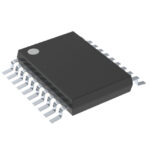 SN74CB3Q3345DGVR

The activity of extra discounts on wholesale prices is in full swing…
Please fill in your contact information and we will send you the latest wholesale price list.






