 ChipApex | Global Electronic Components Supplier

SEARCH
Search Product
Search Post
— IC芯片 | 连接器 | 传感器 | 被动器件 —
Search productSearch post
— IC芯片 | 连接器 | 传感器 | 被动器件 —
Consult the customer manager about the wholesale price.
consultation hotline:86-132-6715-2157
email:[email protected]
Contact the product manager for consultation. One-stop consultation is available.
Do you want a lower wholesale price? Please send us your inquiry and we will reply immediately.
The SN74CBT3126DBR is a quadruple bus switch manufactured by Texas Instruments, belonging to the SN74CBT series. It features four independent single-pole single-throw (SPST) switches housed in an SSOP-16 package. The device operates within a supply voltage range of 2.3 V to 3.6 V and supports data rates up to 200 MHz. Key electrical characteristics include a maximum on-resistance of 40 ohms and a typical propagation delay of 2.5 ns at 5 V. It offers powered-off protection and low standby current, making it suitable for high-speed digital signal routing.
Verify the specific package variant, as the SN74CBT3126 family includes multiple options such as TSSOP, SOIC, and VQFN. Confirm that the selected part matches the required pinout and thermal specifications for your PCB layout. Ensure compatibility with the target supply voltage range of 2.3 V to 3.6 V. Check for RoHS compliance status if environmental regulations apply to your manufacturing process.
Select this component when designing circuits that require isolated bidirectional data paths in low-voltage environments. The SN74CBT3126DBR is appropriate for applications demanding minimal signal distortion and fast switching speeds. Consider the SSOP-16 package constraints regarding board space and thermal dissipation. Evaluate the need for powered-off protection to safeguard downstream components during system power cycles.
This device is part of Texas Instruments' SN74CBT logic family, designed for high-speed bus switching applications. It complements other members like the SN74CBT3245 and SN74CBT3125 by offering discrete channel control. The CBT series utilizes advanced CMOS technology to achieve low on-resistance and high bandwidth while maintaining low power consumption standards typical of modern portable electronic devices.
The SN74CBTLV3126PWR serves as a functional equivalent within the same manufacturer's portfolio, offering similar electrical performance in a TSSOP-14 package. Verify pin-to-pin compatibility before substitution, particularly noting differences in package dimensions and lead spacing between SSOP and alternative form factors.
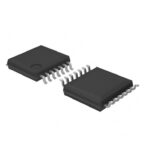 SN74CBT3126DBR

The activity of extra discounts on wholesale prices is in full swing…
Please fill in your contact information and we will send you the latest wholesale price list.





