 ChipApex | Global Electronic Components Supplier
SEARCH
Search Product
Search Post
— IC芯片 | 连接器 | 传感器 | 被动器件 —
Search productSearch post
— IC芯片 | 连接器 | 传感器 | 被动器件 —
Consult the customer manager about the wholesale price.
consultation hotline:86-132-6715-2157
email:[email protected]
Contact the product manager for consultation. One-stop consultation is available.
Do you want a lower wholesale price? Please send us your inquiry and we will reply immediately.
The SN74CBT3306CPWR is a dual FET bus switch from Texas Instruments, featuring level shifting and -2 V undershoot protection. It operates within a supply voltage range of 4.5 V to 5.5 V and supports data I/O levels from 0 V to 5.5 V. The device contains two independent 1:1 switches in an 8-TSSOP package. Key electrical characteristics include a maximum on-resistance of 14 Ω at 4 V and a propagation delay of 0.35 ns at 4 V with a 50 pF load. It functions reliably across an operating temperature range of -40 °C to +85 °C.
Verify the specific suffix CPWR against the manufacturer's official documentation to confirm the TSSOP-8 package type and commercial temperature grade. Ensure the ordering part number matches the exact pinout and electrical specifications required by the design. Cross-reference the datasheet revision history for any recent manufacturing or material changes that may affect compatibility.
Select this component when designing circuits that require robust protection against signal undershoot while maintaining low on-resistance for minimal signal degradation. It is suitable for interfaces where bidirectional data transfer is necessary between 5 V logic domains. Consider the thermal performance and package size constraints associated with the TSSOP-8 footprint during layout planning.
This device belongs to the SN74CBT3306 family of dual FET bus switches. It shares functional similarities with other members like the SN74CBTD3306 series but is distinguished by its specific packaging and operational parameters defined for the standard CBT line. It serves as a critical interface element for managing signal integrity in complex digital architectures.
SN74CBTD3306CDR
The SN74CBT3306CPWR includes active undershoot protection that detects negative transients and ensures the switch remains off until the voltage returns to a safe level, preventing erroneous state changes.
Yes, the device supports level shifting capabilities, allowing it to route signals between different voltage domains effectively while maintaining signal integrity.
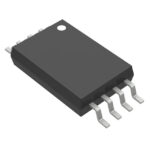 SN74CBT3306CPWR
The activity of extra discounts on wholesale prices is in full swing…
Please fill in your contact information and we will send you the latest wholesale price list.





