 ChipApex | Global Electronic Components Supplier
SEARCH
Search Product
Search Post
— IC芯片 | 连接器 | 传感器 | 被动器件 —
Search productSearch post
— IC芯片 | 连接器 | 传感器 | 被动器件 —
Consult the customer manager about the wholesale price.
consultation hotline:86-132-6715-2157
email:[email protected]
Contact the product manager for consultation. One-stop consultation is available.
Do you want a lower wholesale price? Please send us your inquiry and we will reply immediately.
The SN74CBT6800ADWR is a 10-bit FET bus switch manufactured by Texas Instruments, housed in a 24-pin SOIC (DW) package. It operates within a supply voltage range of 4 V to 5.5 V and supports an operating temperature from -40°C to 85°C. The device features TTL-compatible input levels and provides bidirectional switching with near-zero propagation delay. Key electrical parameters include a maximum on-state resistance of 20 Ohms at VCC = 4 V and a typical propagation delay of 0.25 ns at VCC = 5 V. The B port is precharged to a user-selectable bias voltage to minimize live-insertion noise.
Verify the specific ordering suffix 'DW' corresponds to the SOIC package variant when sourcing. Confirm that the component status aligns with current production requirements, as availability may vary. Ensure compatibility with the required 4 V to 5.5 V supply voltage range and the specified -40°C to 85°C operating temperature envelope for your application environment.
Select this component for designs requiring a single enable control for ten parallel channels. The device is suitable for applications needing TTL-compatible logic levels and low power consumption. Consider the 24-pin SOIC package dimensions for PCB layout constraints. Verify that the bias voltage requirements for live insertion match the system's operational needs.
This part belongs to the SN74CBT6800A series of 10-bit FET bus switches. It is designed to offer high-speed performance with minimal signal degradation. The family includes various package options such as SSOP, TSSOP, and TVSOP, allowing flexibility in board space and thermal management requirements while maintaining consistent electrical characteristics across variants.
Direct substitutes include other parts from the SN74CBT6800A family with different package markings, such as SN74CBT6800APWR for TSSOP or SN74CBT6800ADBR for SSOP, provided pinout and electrical specifications remain identical.
The device precharges the B port to a user-selectable bias voltage through an equivalent 10-kΩ resistor when the switch is off or VCC is 0 V, minimizing live-insertion noise.
When the ON input is low, the switch connects Port A to Port B. When ON is high, the switch between Port A and Port B opens, isolating the ports.
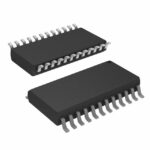 SN74CBT6800ADWR
The activity of extra discounts on wholesale prices is in full swing…
Please fill in your contact information and we will send you the latest wholesale price list.





