 ChipApex | Global Electronic Components Supplier
SEARCH
Search Product
Search Post
— IC芯片 | 连接器 | 传感器 | 被动器件 —
Search productSearch post
— IC芯片 | 连接器 | 传感器 | 被动器件 —
Consult the customer manager about the wholesale price.
consultation hotline:86-132-6715-2157
email:[email protected]
Contact the product manager for consultation. One-stop consultation is available.
Do you want a lower wholesale price? Please send us your inquiry and we will reply immediately.
The SN74CBTS3384PWLE is a 10-bit FET bus switch with Schottky diode clamping, organized as two independent 5-bit switches. It operates at a supply voltage of 4 V to 5.5 V and supports TTL-compatible input levels. The device features low on-state resistance (typically 5 Ω to 14 Ω) and propagation delay of 0.25 ns to 0.35 ns at 5 V. It includes separate output-enable inputs for each 5-bit section and is housed in a 24-pin TSSOP package.
Verify the specific ordering suffix 'LE' against the official Texas Instruments Package Option Addendum, as standard listings typically show 'PW' or 'PWR'. Confirm that the component status matches current production requirements, noting that some variants may be designated NRND. Ensure the selected package type aligns with PCB layout specifications.
Select this component when designing circuits requiring 10-bit bidirectional bus switching with fast response times. The device is suitable for applications needing TTL-compatible control signals and protection against negative voltage transients via internal clamping diodes. Verify that the operating temperature range of -40°C to 85°C meets environmental constraints.
This part belongs to the SN74CBTS3384 family of 10-bit FET bus switches. It is designed for high-speed digital applications where low insertion loss and fast switching are critical. The device provides a cost-effective solution for managing multiple parallel data lines within a single integrated circuit package.
Direct substitutes include SN74CBTS3384DW, SN74CBTS3384DBR, and SN74CBTS3384DGVR. These alternatives offer identical electrical characteristics but differ in physical packaging such as SOIC, SSOP, or TVSOP. Ensure pin compatibility and thermal performance match the existing design constraints.
The Schottky diodes clamp undershoot on the I/O pins, protecting the device from negative voltage transients that could otherwise damage the internal circuitry.
The device is organized as two independent 5-bit bus switches, each with its own separate output-enable (OE) input for controlling the connection between port A and port B.
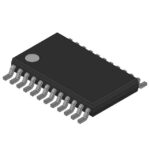 SN74CBTS3384PWLE
The activity of extra discounts on wholesale prices is in full swing…
Please fill in your contact information and we will send you the latest wholesale price list.





