 ChipApex | Global Electronic Components Supplier
SEARCH
Search Product
Search Post
— IC芯片 | 连接器 | 传感器 | 被动器件 —
Search productSearch post
— IC芯片 | 连接器 | 传感器 | 被动器件 —
Consult the customer manager about the wholesale price.
consultation hotline:86-132-6715-2157
email:[email protected]
Contact the product manager for consultation. One-stop consultation is available.
Do you want a lower wholesale price? Please send us your inquiry and we will reply immediately.
The SN74HC138NSR is a single 3-to-8 decoder/demultiplexer from the Texas Instruments SN74HC138 family, housed in a 16-pin SOIC package. It operates within a supply voltage range of 2 V to 6 V and supports an operating temperature range of -40°C to +85°C. The device features three binary select inputs (A, B, C) and three enable inputs (one active-high G1, two active-low G2A/G2B). It provides eight active-low outputs (Y0-Y7), where only one output is pulled low based on the address inputs when enabled. Electrical characteristics include a maximum propagation delay of 45 ns at 4.5 V, a typical delay of 15 ns, and an output drive capability of ±4 mA at 5 V.
Verify the specific ordering suffix 'SR' indicates tape-and-reel packaging containing 2000 units per reel. Confirm RoHS compliance status and lead finish details via the manufacturer's current orderable addendum. Ensure the component meets the required moisture sensitivity level (MSL Level-1) for your assembly process. Cross-reference the exact part number against the latest datasheet revision to validate availability and production status.
Select this component for designs requiring a standard HC logic family decoder with surface-mount compatibility. The wide 2 V to 6 V supply range allows flexibility across various digital logic levels. Consider the 45 ns maximum propagation delay for timing constraints in memory addressing or data routing paths. Verify that the 16-pin SOIC footprint aligns with the PCB layout requirements and thermal dissipation needs of the target application environment.
This device belongs to the SNx4HC138 series of 3-line to 8-line decoders and demultiplexers manufactured by Texas Instruments. It utilizes CMOS technology to provide low power consumption and high noise immunity. The SN74HC138NSR variant specifically denotes the commercial grade version (-40°C to +85°C) packaged in a small-outline package (SOIC) supplied in a tape-and-reel format for automated assembly processes.
SN74HC138DR
The device has three enable inputs: one active-high (G1) and two active-low (G2A, G2B). All three must be in their active states simultaneously for the selected output to go low; otherwise, all outputs remain high.
When any of the enable inputs are deactivated, all eight outputs (Y0 through Y7) are forced to a high logic level, regardless of the state of the binary select inputs.
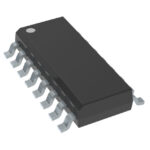 SN74HC138NSR
The activity of extra discounts on wholesale prices is in full swing…
Please fill in your contact information and we will send you the latest wholesale price list.






