 ChipApex | Global Electronic Components Supplier
SEARCH
Search Product
Search Post
— IC芯片 | 连接器 | 传感器 | 被动器件 —
Search productSearch post
— IC芯片 | 连接器 | 传感器 | 被动器件 —
Consult the customer manager about the wholesale price.
consultation hotline:86-132-6715-2157
email:[email protected]
Contact the product manager for consultation. One-stop consultation is available.
Do you want a lower wholesale price? Please send us your inquiry and we will reply immediately.
The SN74HC151NSR is an 8-line to 1-line data selector/multiplexer from the Texas Instruments SN74HC series. It provides complete binary decoding to select one of eight data sources. The device operates with a supply voltage range of 2 V to 6 V and features low input current of 1 μA maximum. It includes a strobe (G) input that must be at a low logic level to enable the selected input. The standard output (Y) and inverse output (W) are provided. The component is designed for surface mount installation in a TSSOP-16 package, suitable for applications requiring high-speed operation and low power consumption.
Verify the specific suffix NSR corresponds to the TSSOP-16 package and reel packaging configuration. Confirm RoHS compliance status and moisture sensitivity level requirements for your assembly process. Ensure the operating temperature range meets your environmental specifications. Cross-reference the manufacturer part number with authorized distributors to avoid counterfeit components.
Select this component when an 8-channel multiplexer with HC logic speed and CMOS input characteristics is required. Consider the TSSOP-16 package size constraints and the 2 V to 6 V supply voltage range. Evaluate if the propagation delay and output drive capabilities meet your system timing and load requirements compared to other logic families.
This device belongs to the SN74HC family of high-speed CMOS logic devices. It functions as an 8-to-1 line data selector or multiplexer. The SN74HC series is known for wide operating voltage ranges and compatibility with various logic standards. This specific part integrates eight data inputs, three address inputs, and a strobe control into a single integrated circuit.
The strobe (G) input must be at a low logic level to enable the selected input. When the strobe is high, the standard output (Y) is forced low and the inverse output (W) is forced high, regardless of the address inputs.
The inverse output (W) provides the complement of the selected data input. While the standard output (Y) reflects the selected data directly, W reflects the logical NOT of that data, allowing for dual-phase signal availability.
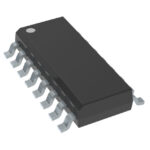 SN74HC151NSR
The activity of extra discounts on wholesale prices is in full swing…
Please fill in your contact information and we will send you the latest wholesale price list.






