 ChipApex | Global Electronic Components Supplier
SEARCH
Search Product
Search Post
— IC芯片 | 连接器 | 传感器 | 被动器件 —
Search productSearch post
— IC芯片 | 连接器 | 传感器 | 被动器件 —
Consult the customer manager about the wholesale price.
consultation hotline:86-132-6715-2157
email:[email protected]
Contact the product manager for consultation. One-stop consultation is available.
Do you want a lower wholesale price? Please send us your inquiry and we will reply immediately.
The SN74HC157NSRG4 is a quadruple 2-line to 1-line data selector/multiplexer manufactured by Texas Instruments. It operates within a supply voltage range of 2V to 6V and supports an operating temperature from -40°C to +85°C. The device features four independent multiplexers controlled by a common address select input (A/B) and an active-low strobe input (G). Key electrical parameters include a typical propagation delay of 11ns at 5V, low power consumption with a maximum static current of 80µA, and output drive capabilities of ±6mA at 5V. It utilizes standard CMOS inputs with TTL-compatible thresholds.
Verify the specific ordering suffix 'SRG4' against the manufacturer's latest Package Option Addendum to confirm the tape-and-reel carrier type and lead finish specifications. Ensure the selected package variant matches the required thermal resistance and pin configuration for the target PCB layout. Cross-reference the RoHS status and material type listed in the official documentation prior to finalizing procurement orders.
Select this component when a design requires four independent data paths controlled by a single address signal. Verify that the application load capacitance remains within the specified limits to maintain timing performance. Confirm that the supply voltage range aligns with the system's power rails and that the operating temperature range covers the environmental conditions of the intended deployment.
This part belongs to the SNx4HC157 family of high-speed silicon gate CMOS multiplexers. The NS package designation indicates a Small Outline Package (SOP) variant. The device is functionally equivalent to other members of the HC series but offers specific packaging and manufacturing lot characteristics defined by the suffix codes.
SN74HC157DR
When the strobe (G) input is held at a high level, it forces all four Y outputs to a low state, overriding the address select and data inputs.
The A/B input serves as the address select line. It determines which of the two data sources (A or B) is routed to the corresponding Y output for all four channels simultaneously.
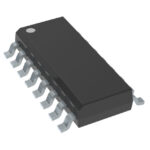 SN74HC157NSRG4
The activity of extra discounts on wholesale prices is in full swing…
Please fill in your contact information and we will send you the latest wholesale price list.





