 ChipApex | Global Electronic Components Supplier
SEARCH
Search Product
Search Post
— IC芯片 | 连接器 | 传感器 | 被动器件 —
Search productSearch post
— IC芯片 | 连接器 | 传感器 | 被动器件 —
Consult the customer manager about the wholesale price.
consultation hotline:86-132-6715-2157
email:[email protected]
Contact the product manager for consultation. One-stop consultation is available.
Do you want a lower wholesale price? Please send us your inquiry and we will reply immediately.
The SN74HC573AQPWRG4Q1 is an automotive-grade octal transparent D-type latch with three-state outputs, manufactured by Texas Instruments. It operates within a supply voltage range of 2 V to 6 V and features a TSSOP-20 package. Key electrical parameters include a propagation delay of 200 ns at 2 V, 40 ns at 4.5 V, and 34 ns at 6 V. The device supports a low-level output current of 32 mA and a high-level output current of -7.8 mA. Static current consumption is 8 uA. It functions across an extended temperature range from -40°C to +125°C and holds AEC-Q100 qualification.
Verify the complete part number including the Q1 suffix to confirm automotive qualification status. Ensure the TSSOP-20 package variant matches the target PCB footprint design. Confirm RoHS compliance requirements align with specific regional manufacturing regulations before finalizing procurement orders.
Select this component when designing for automotive applications requiring wide voltage operation between 2 V and 6 V. The extended temperature capability up to 125°C makes it suitable for harsh environments. Consider the 32 mA low-level drive strength for direct interfacing with moderate loads without additional buffering.
This device belongs to the SN74HC573A family of octal latches. The 'Q1' designation specifically indicates automotive qualification, while 'G4' denotes lead-free and RoHS-compliant packaging. It serves as a specialized version of standard commercial logic ICs tailored for rigorous automotive industry standards and long-term availability requirements.
Direct substitutes include other AEC-Q100 qualified octal latches from the same manufacturer series. Verify pin compatibility and electrical specifications against SN74HC573APWRG4Q1 equivalents. Cross-reference alternative packages such as SOIC-20 if form factor adjustments are necessary during redesign.
The device is rated for an extended temperature range with a maximum operating temperature of +125°C.
Yes, the SN74HC573AQPWRG4Q1 features three-state outputs controlled by the OE input to facilitate bus-driven designs.
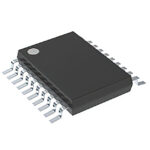 SN74HC573AQPWRG4Q1
The activity of extra discounts on wholesale prices is in full swing…
Please fill in your contact information and we will send you the latest wholesale price list.





