 ChipApex | Global Electronic Components Supplier
SEARCH
Search Product
Search Post
— IC芯片 | 连接器 | 传感器 | 被动器件 —
Search productSearch post
— IC芯片 | 连接器 | 传感器 | 被动器件 —
Consult the customer manager about the wholesale price.
consultation hotline:86-132-6715-2157
email:[email protected]
Contact the product manager for consultation. One-stop consultation is available.
Do you want a lower wholesale price? Please send us your inquiry and we will reply immediately.
The SN74HC573NSR is an octal transparent D-type latch manufactured by Texas Instruments, belonging to the HC logic series. It features eight D-type latches with three-state outputs and operates within a supply voltage range of 2 V to 6 V. The device utilizes a 20-pin SSOP surface-mount package. Key electrical characteristics include a propagation delay of 200 ns at 2 V, 40 ns at 4.5 V, and 34 ns at 6 V. It supports low-level output currents of 32 mA and high-level output currents of -7.8 mA, with a static current of 8 uA. The component functions over an operating temperature range from -40°C to +85°C.
Verify the specific suffix 'NSR' against official Texas Instruments documentation to confirm the exact package type and tape-and-reel specifications. Ensure the ordering part number matches the required pin configuration and manufacturing revision. Cross-reference the datasheet for any recent product change notices affecting this specific variant before finalizing procurement.
Select this component when an octal latch with three-state capability is required for bus interfacing. The HC series offers standard CMOS performance suitable for general-purpose digital logic. Consider the SSOP package constraints regarding thermal dissipation and board space. Verify that the 2 V to 6 V operating range aligns with the system power supply rails and that the propagation delays meet the timing requirements of the target application.
This device is part of the SN74HC573A family of octal transparent D-type latches. It shares functional similarities with other members of the 74HC series but differs in packaging and specific suffix designations. The SN74HC573NSR represents a specific surface-mount variant designed for automated assembly processes. It complements other Texas Instruments logic devices used in complex digital circuit designs requiring data storage and bus management.
Compatible substitutes include SN74HC573DR (SOIC-20), SN74HC573PW (TSSOP-20), and SN74HC573N (PDIP-20). Verify pinout compatibility and electrical parameters before substitution. Ensure the replacement part meets the same voltage and temperature specifications as the original design requires.
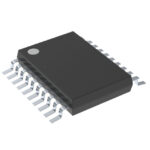 SN74HC573NSR
The activity of extra discounts on wholesale prices is in full swing…
Please fill in your contact information and we will send you the latest wholesale price list.





