 ChipApex | Global Electronic Components Supplier
SEARCH
Search Product
Search Post
— IC芯片 | 连接器 | 传感器 | 被动器件 —
Search productSearch post
— IC芯片 | 连接器 | 传感器 | 被动器件 —
Consult the customer manager about the wholesale price.
consultation hotline:86-132-6715-2157
email:[email protected]
Contact the product manager for consultation. One-stop consultation is available.
Do you want a lower wholesale price? Please send us your inquiry and we will reply immediately.
The SN74HCS139QPWRQ1 is an automotive-qualified dual 2-to-4-line decoder/demultiplexer from Texas Instruments. It operates within a supply voltage range of 2 V to 6 V and supports ambient temperatures from -40°C to +125°C. The device features Schmitt-trigger inputs for noise tolerance and balanced CMOS push-pull outputs capable of ±7.8 mA drive current at 6 V. Propagation delay ranges from 6 ns to 45 ns depending on voltage and temperature. It is housed in a 16-pin TSSOP package.
Verify the specific ordering suffix matches the required package type, as the Q1 series includes both SOIC and TSSOP variants. Confirm that the component meets AEC-Q100 Grade 1 requirements for your target operating temperature range. Ensure design validation accounts for the specific thermal resistance values associated with the selected package style during implementation.
Select this component when designing systems requiring multiple independent decoding channels within a single integrated circuit. The inclusion of Schmitt triggers makes it suitable for environments with significant electrical noise or slow signal transitions. Verify that the output drive capability aligns with the load requirements of the connected memory or peripheral devices.
This part belongs to the SN74HCS139-Q1 family of logic ICs designed specifically for automotive electronics. It provides two independent decoding functions, allowing for efficient management of address lines in complex digital architectures. The HCS designation indicates the use of HCMOS technology with Schmitt-trigger inputs, distinguishing it from standard HC series components.
SN74HCS139QDRQ1 (SOIC Package)
Unlike standard CMOS inputs, holding a Schmitt-trigger input at a valid voltage level other than VCC or ground does not cause huge increases in power consumption, though dynamic current may increase with slow transitioning signals.
Unused inputs must be terminated to either VCC or ground to prevent undefined operational states caused by floating voltages. They should not be left unconnected.
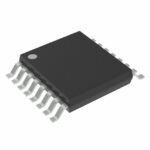 SN74HCS139QPWRQ1
The activity of extra discounts on wholesale prices is in full swing…
Please fill in your contact information and we will send you the latest wholesale price list.






