 ChipApex | Global Electronic Components Supplier
SEARCH
Search Product
Search Post
— IC芯片 | 连接器 | 传感器 | 被动器件 —
Search productSearch post
— IC芯片 | 连接器 | 传感器 | 被动器件 —
Consult the customer manager about the wholesale price.
consultation hotline:86-132-6715-2157
email:[email protected]
Contact the product manager for consultation. One-stop consultation is available.
Do you want a lower wholesale price? Please send us your inquiry and we will reply immediately.
The SN74HCT138PWR is a 3-line to 8-line decoder/demultiplexer manufactured by Texas Instruments in the HCT logic series. It operates within a supply voltage range of 4.5 V to 5.5 V and features three binary select inputs (A, B, C) and three enable inputs (G1, G2A, G2B). The device provides eight active-low outputs capable of driving up to ten LSTTL loads with ±4-mA output drive at 5 V. Typical propagation delay is 17 ns, with maximum delays reaching 45 ns at 4.5 V. It consumes a maximum supply current of 80 µA and has a low input current of 1 µA max. The component is housed in a 16-pin TSSOP package and supports an operating temperature range from -40 °C to +85 °C.
Verify the specific ordering suffix 'PWR' corresponds to the TSSOP-16 package and tape-and-reel carrier format. Confirm RoHS compliance status and lead finish details via the manufacturer's latest orderable addendum. Ensure the procurement channel sources production-active parts rather than obsolete variants like the tube-packaged 'PW'. Check moisture sensitivity level ratings for storage and reflow requirements.
Select this component when TTL-compatible inputs are required alongside CMOS performance levels. The HCT series offers speed comparable to Low-Power Schottky TTL but with lower power dissipation. Consider the three enable inputs for system expansion needs, which reduce the requirement for additional logic gates during cascading operations compared to devices with fewer control pins.
This device belongs to the SNx4HCT138 family of 3-line to 8-line decoders. It is part of Texas Instruments' standard catalog line, distinct from the military-grade SN54HCT138 variant. The HCT technology bridges the gap between standard CMOS and TTL logic families, providing necessary voltage compatibility for legacy systems while utilizing modern CMOS fabrication processes.
SN74HCT138DR (SOIC package)
The device incorporates three enable inputs: one active-high (G1) and two active-low (G2A and G2B).
No, all unused inputs must be held at VCC or GND to ensure proper device operation and prevent undefined operational states.
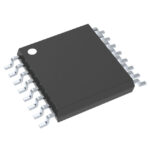 SN74HCT138PWR
The activity of extra discounts on wholesale prices is in full swing…
Please fill in your contact information and we will send you the latest wholesale price list.






