 ChipApex | Global Electronic Components Supplier
SEARCH
Search Product
Search Post
— IC芯片 | 连接器 | 传感器 | 被动器件 —
Search productSearch post
— IC芯片 | 连接器 | 传感器 | 被动器件 —
Consult the customer manager about the wholesale price.
consultation hotline:86-132-6715-2157
email:[email protected]
Contact the product manager for consultation. One-stop consultation is available.
Do you want a lower wholesale price? Please send us your inquiry and we will reply immediately.
The SN74LS138NSR is a 3-line to 8-line decoder and demultiplexer from the Texas Instruments SN74LS series. It features three address inputs (A, B, C) and eight active-low outputs (Y0–Y7). The device includes three enable inputs: two active-low (G2A, G2B) and one active-high (G1), requiring specific logic levels for operation. It operates on a single supply voltage ranging from 4.75 V to 5.25 V. The component utilizes a 16-pin SOIC surface-mount package with a propagation delay of 41 ns. It supports a maximum clock frequency of 35 MHz and functions within an operating temperature range of 0°C to +70°C.
Verify the exact suffix against the manufacturer's current documentation to confirm package type and environmental compliance. Ensure the ordering code matches the required tape-and-reel configuration for automated assembly processes. Cross-reference the datasheet revision date to validate electrical characteristics and pinout definitions before finalizing procurement specifications.
Select this component when a standard TTL-compatible decoder is required for 5V logic systems. Consider the LS series speed and power consumption trade-offs compared to HC or HCT variants. Verify that the SOIC package dimensions align with the target PCB footprint and that the operating temperature range meets the application's environmental constraints.
This part belongs to the widely used 74LS138 family of decoders. It serves as a fundamental building block in digital electronics for expanding input lines and managing complex logic states. The SN74LS138NSR variant specifically denotes the surface-mount version, offering space-saving advantages over through-hole packages while maintaining compatibility with standard 74-series logic interfaces.
SN74LS138D
The G1 input must be high, while both G2A and G2B inputs must be low for the decoder to operate. If these conditions are not met, all outputs remain high.
The device uses three address inputs (A, B, C) to select one of the eight outputs. The binary value on these inputs determines which specific output line goes low.
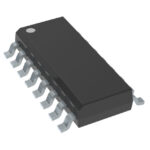 SN74LS138NSR
The activity of extra discounts on wholesale prices is in full swing…
Please fill in your contact information and we will send you the latest wholesale price list.






