 ChipApex | Global Electronic Components Supplier
SEARCH
Search Product
Search Post
— IC芯片 | 连接器 | 传感器 | 被动器件 —
Search productSearch post
— IC芯片 | 连接器 | 传感器 | 被动器件 —
Consult the customer manager about the wholesale price.
consultation hotline:86-132-6715-2157
email:[email protected]
Contact the product manager for consultation. One-stop consultation is available.
Do you want a lower wholesale price? Please send us your inquiry and we will reply immediately.
The SN74LS139ANSR is a dual 2-line to 4-line decoder/demultiplexer manufactured by Texas Instruments. It operates within a supply voltage range of 4.75V to 5.25V and features Schottky-clamped inputs for high performance. The device is housed in a 16-pin SOIC package with a width of 5.30mm. It supports an operating temperature range from 0°C to 70°C and has a maximum output low current of 8mA. The component complies with RoHS standards and is lead-free.
Verify the exact suffix 'ANSR' against the manufacturer's official datasheet to confirm the specific tape-and-reel packaging and pin configuration. Ensure the procurement channel provides documentation confirming the RoHS compliance status and lead-free composition as specified in the component parameters. Cross-reference the package dimensions with the official mechanical outline drawing to guarantee compatibility with existing PCB footprints.
Select this component when designing systems requiring two separate decoding functions within a single integrated circuit. It is suitable for applications operating at standard 5V logic levels where moderate propagation delays are acceptable. Consider the 16-pin SOIC package constraints during layout planning. Evaluate thermal dissipation requirements, noting the 200mW power dissipation limit typical for this logic family under standard operating conditions.
This part belongs to the Texas Instruments SN54/74LS139/A series, which includes variants such as SN74LS139ADR and SN74S139ANSR. These components share the same logical function but may differ in package type, speed characteristics, or manufacturing revisions. The LS series specifically denotes Low-power Schottky technology, offering a balance between power consumption and switching speed compared to standard or high-speed variants.
SN74LS139ADR is a direct functional substitute with identical logic specifications. SN74ALS139ANSRE4 offers faster switching speeds while maintaining pin compatibility. SN74HC139QPWRG4Q1 provides CMOS technology with wider voltage tolerance but requires verification of interface compatibility.
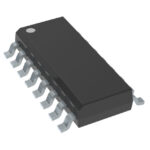 SN74LS139ANSR
The activity of extra discounts on wholesale prices is in full swing…
Please fill in your contact information and we will send you the latest wholesale price list.






