 ChipApex | Global Electronic Components Supplier
SEARCH
Search Product
Search Post
— IC芯片 | 连接器 | 传感器 | 被动器件 —
Search productSearch post
— IC芯片 | 连接器 | 传感器 | 被动器件 —
Consult the customer manager about the wholesale price.
consultation hotline:86-132-6715-2157
email:[email protected]
Contact the product manager for consultation. One-stop consultation is available.
Do you want a lower wholesale price? Please send us your inquiry and we will reply immediately.
The SN74LS42D is a binary-to-decimal decoder manufactured by Texas Instruments, belonging to the SN74LS logic family. It features a 14-pin Small Outline Integrated Circuit (SOIC) package designed for surface mount technology. The device operates within a supply voltage range of 4.75 V to 5.25 V and supports a commercial operating temperature range from 0°C to +70°C. Key electrical specifications include a low-level output current of 400 µA and a high-level output current of -16 mA. The propagation delay is specified at 20 ns, ensuring reliable signal transmission in standard digital logic applications.
Verify the specific ordering suffix against manufacturer documentation to confirm package type and tape-and-reel specifications. Ensure the component meets RoHS compliance requirements if mandated by project standards. Cross-reference the datasheet revision history to validate parameter consistency before finalizing procurement orders.
Select this component when a single binary-to-decimal conversion function is required within a system utilizing the SN74LS logic family. Consider the SOIC package dimensions for PCB layout constraints and verify that the 20 ns propagation delay aligns with the system timing budget. Evaluate thermal dissipation capabilities relative to the ambient operating environment.
This part belongs to the Texas Instruments SN74LS series, which utilizes Low-power Schottky technology. This series is characterized by improved speed compared to standard TTL while maintaining lower power dissipation. The SN74LS42D specifically addresses the need for binary-coded decimal translation in compact surface-mount designs.
Compatible substitutes include the SN74LS42N for through-hole mounting or equivalent parts from other manufacturers such as ON Semiconductor or NXP, provided they adhere to the same LS logic family specifications and pinout configuration.
The outputs are active-low, meaning they assume a low voltage state corresponding to the decoded binary input while all other outputs remain high.
The device utilizes four binary inputs to select one of the ten available outputs based on the input code.
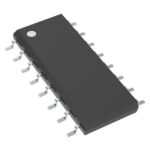 SN74LS42D
The activity of extra discounts on wholesale prices is in full swing…
Please fill in your contact information and we will send you the latest wholesale price list.





