 ChipApex | Global Electronic Components Supplier
SEARCH
Search Product
Search Post
— IC芯片 | 连接器 | 传感器 | 被动器件 —
Search productSearch post
— IC芯片 | 连接器 | 传感器 | 被动器件 —
Consult the customer manager about the wholesale price.
consultation hotline:86-132-6715-2157
email:[email protected]
Contact the product manager for consultation. One-stop consultation is available.
Do you want a lower wholesale price? Please send us your inquiry and we will reply immediately.
The SN74LV123ATPWRQ1 is a dual retriggerable monostable multivibrator from Texas Instruments, designed for automotive applications. It features Schmitt-trigger inputs to filter noisy signals and operates within a supply voltage range of 2 V to 5.5 V. The device provides two independent circuits in a 16-TSSOP package. Key electrical parameters include a propagation delay of 14 ns and output currents of ±12 mA. It supports a minimum pulse width of 5 ns and has a maximum quiescent current of 20 µA. The component is qualified to AEC-Q100 standards and functions reliably across an operating temperature range of -40°C to +125°C.
Verify the specific suffix 'Q1' confirms AEC-Q100 automotive qualification status before integration. Ensure the TPWR package variant matches your PCB footprint requirements. Confirm RoHS3 compliance and REACH status align with regional manufacturing regulations. Cross-reference the manufacturer part number against official TI distribution channels to avoid counterfeit components.
Select this component when automotive reliability and wide voltage operation are required. The dual circuit design allows cost-effective implementation of multiple timing functions. Verify that the 14 ns propagation delay meets your system's timing constraints. Consider the TSSOP-16 package dimensions for thermal management and board space limitations compared to SOIC alternatives.
This part belongs to the SN74LV123 family of monostable multivibrators. The 'A' indicates enhanced specifications over previous generations. The 'T' denotes tape and reel packaging. The 'Q1' suffix signifies automotive qualification. It is part of Texas Instruments' broader LV logic portfolio designed for low-voltage digital applications.
SN74LV123APWRQ1 is a direct pin-compatible alternative within the same automotive series. SN74LV123ADRQ1 offers the same functionality in a 16-SOIC package. Non-automotive equivalents like SN74LV123APWR lack Q1 qualification. Verify package compatibility and temperature ratings when substituting.
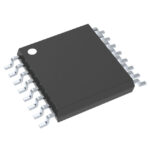 SN74LV123ATPWRQ1
The activity of extra discounts on wholesale prices is in full swing…
Please fill in your contact information and we will send you the latest wholesale price list.





