 ChipApex | Global Electronic Components Supplier
SEARCH
Search Product
Search Post
— IC芯片 | 连接器 | 传感器 | 被动器件 —
Search productSearch post
— IC芯片 | 连接器 | 传感器 | 被动器件 —
Consult the customer manager about the wholesale price.
consultation hotline:86-132-6715-2157
email:[email protected]
Contact the product manager for consultation. One-stop consultation is available.
Do you want a lower wholesale price? Please send us your inquiry and we will reply immediately.
The SN74LV4053APWR is a triple 2-channel analog multiplexer or demultiplexer designed for operation with supply voltages ranging from 1.65V to 5.5V. It supports mixed-mode voltage operation on all ports and handles both digital and analog signals up to 5.5V peak in either direction. The device features low crosstalk, extremely low input current, and high on-off output-voltage ratios. It includes individual switch controls and offers ESD protection exceeding JESD 22 standards. Packaged in a 16-pin TSSOP, it operates within an ambient temperature range of -40°C to 85°C.
Verify the specific ordering suffix 'PW' corresponds to the 16-pin TSSOP package configuration required for your design. Confirm that the active status aligns with long-term availability needs. Ensure the operating voltage range matches your system's power rails. Validate thermal performance under maximum load conditions. Check for any recent documentation updates regarding pin functions or electrical characteristics.
Select this component when a compact solution for routing multiple analog or digital signals is required. It is suitable for designs needing independent control of three separate channels. Consider its low power consumption and wide supply voltage compatibility. Evaluate its signal integrity specifications against your bandwidth requirements. Ensure the TSSOP footprint fits your PCB layout constraints.
This part belongs to the SNx4LV4053A family of triple 2-channel analog multiplexers. It shares functional similarities with other LV series logic devices but is optimized for analog switching applications. The 'SN' prefix indicates commercial grade temperature range. The 'LV' denotes low-voltage CMOS technology compatible with various logic families.
Direct replacements include SN74LV4053ADBR (SSOP), SN74LV4053ADR (SOIC), and SN74LV4053ARGYR (VQFN). These variants offer identical electrical performance but differ in physical package dimensions. Verify pinout compatibility and thermal characteristics before substitution.
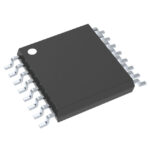 SN74LV4053APWR
The activity of extra discounts on wholesale prices is in full swing…
Please fill in your contact information and we will send you the latest wholesale price list.





