 ChipApex | Global Electronic Components Supplier
SEARCH
Search Product
Search Post
— IC芯片 | 连接器 | 传感器 | 被动器件 —
Search productSearch post
— IC芯片 | 连接器 | 传感器 | 被动器件 —
Consult the customer manager about the wholesale price.
consultation hotline:86-132-6715-2157
email:[email protected]
Contact the product manager for consultation. One-stop consultation is available.
Do you want a lower wholesale price? Please send us your inquiry and we will reply immediately.
The SN74LV4053ATPWREP is a military-enhanced, dual 2-to-1 analog multiplexer/demultiplexer manufactured by Texas Instruments. It operates on a single supply voltage ranging from 2 V to 5.5 V and supports mixed-mode voltage operation across all ports. The device integrates three independent SPDT switches with low on-resistance of 75 Ohms maximum. It features a bandwidth of 50 MHz, propagation delay of 16 ns, and switch times of 28 ns maximum. Designed for wide temperature ranges, it functions between -40°C and +105°C. Packaged in a TSSOP-16 housing, it offers low crosstalk and high ESD protection suitable for demanding signal routing applications.
Verify the complete part number including the RE suffix to confirm military enhancement status. Ensure the TSSOP-16 package matches the design footprint. Confirm RoHS compliance details through official documentation. Validate that the operating temperature range meets system requirements. Check for specific qualification standards required by the application environment.
Select this component when military-grade reliability is required for analog signal routing. Compare against standard commercial variants if environmental constraints are less stringent. Consider the 2:1 configuration for simple channel selection tasks. Evaluate the 50 MHz bandwidth against signal frequency requirements. Verify compatibility with available control logic voltages within the 2 V to 5.5 V range.
This device belongs to the SN74LV4053A family of analog multiplexers. The REP suffix indicates a specific military or enhanced variant distinct from standard commercial parts like the SN74LV4053APWR. It shares functional similarities with other LV series switches but offers specialized reliability features. The family provides versatile signal switching capabilities for both digital and analog domains.
The SN74LV4053APWR is the commercial equivalent without military enhancements. The SN74LV4053APWT is an older discontinued variant in the same package. Verify pinout compatibility before substitution. Ensure thermal and electrical specifications meet the original design intent.
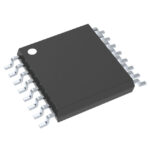 SN74LV4053ATPWREP
The activity of extra discounts on wholesale prices is in full swing…
Please fill in your contact information and we will send you the latest wholesale price list.





