 ChipApex | Global Electronic Components Supplier
SEARCH
Search Product
Search Post
— IC芯片 | 连接器 | 传感器 | 被动器件 —
Search productSearch post
— IC芯片 | 连接器 | 传感器 | 被动器件 —
Consult the customer manager about the wholesale price.
consultation hotline:86-132-6715-2157
email:[email protected]
Contact the product manager for consultation. One-stop consultation is available.
Do you want a lower wholesale price? Please send us your inquiry and we will reply immediately.
The SN74LVC138ADRG4 is a low-voltage CMOS 3-line to 8-line decoder/demultiplexer manufactured by Texas Instruments. It operates within a supply voltage range of 1.65 V to 3.6 V and features three binary address inputs and eight active-low outputs. The device includes two active-low enable inputs and one active-high enable input for expansion capabilities. Packaged in a 16-pin TSSOP, it exhibits a propagation delay of 6.7 ns at 3.0 V. The component supports surface-mount installation and functions reliably across an operating temperature range from -40°C to +85°C.
Verify the specific suffix 'G4' indicates lead-free composition and RoHS compliance as per manufacturer standards. Confirm the package type matches the required PCB footprint, specifically the 16-lead Thin Shrink Small Outline Package (TSSOP). Ensure the ordering quantity aligns with reel specifications provided by authorized distributors to avoid packaging discrepancies during assembly.
Select this component when low power consumption and wide voltage tolerance are required for logic decoding tasks. The LVC series offers superior performance compared to older LV variants while maintaining pin compatibility. Consider the propagation delay characteristics relative to system clock speeds. Verify that the active-low output polarity aligns with downstream circuit requirements without additional inversion stages.
This part belongs to the SN74LVC138A family of decoders and demultiplexers. It serves as a standard logic IC for converting binary codes into one-of-eight active signals. The device is widely used in digital electronics where efficient address mapping and signal routing are necessary. It complements other logic families by providing high-speed operation at reduced voltage levels.
SN74LVC138ADRE4: Equivalent function with different tape-and-reel packaging configuration.
The outputs are active-low, meaning they drive a low logic level when selected and remain high otherwise.
It has three enable inputs: two active-low (G1, G2A, G2B) and one active-high (G1), allowing for cascading multiple units.
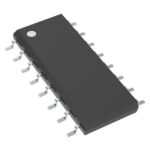 SN74LVC138ADRG4
The activity of extra discounts on wholesale prices is in full swing…
Please fill in your contact information and we will send you the latest wholesale price list.





