 ChipApex | Global Electronic Components Supplier

SEARCH
Search Product
Search Post
— IC芯片 | 连接器 | 传感器 | 被动器件 —
Search productSearch post
— IC芯片 | 连接器 | 传感器 | 被动器件 —
Consult the customer manager about the wholesale price.
consultation hotline:86-132-6715-2157
email:[email protected]
Contact the product manager for consultation. One-stop consultation is available.
Do you want a lower wholesale price? Please send us your inquiry and we will reply immediately.
SN74LVC373AGQNR is listed in the Latches range at ChipApex. The manufacturer field lists Texas Instruments. Its product description is IC D-TYPE TRANSP SGL 8:8 20BGA. Review the specifications below when checking this part for your BOM.
The SN74LVC373AGQNR is an octal transparent D-type latch with 3-state outputs from the Texas Instruments LVC series. It operates within a supply voltage range of 1.65 V to 3.6 V and features inputs that accept voltages up to 5.5 V, supporting mixed-mode signal operation. The device provides high drive capability with output currents reaching 24 mA at 3.3 V. Propagation delay is specified at a maximum of 6.8 ns at 3.3 V. It includes Ioff circuitry for partial-power-down support and exhibits latch-up performance exceeding 250 mA per JESD 17 standards.
Verify the specific package configuration associated with the GQN suffix against the manufacturer's official orderable addendum. Confirm the operating temperature range and RoHS compliance status directly with the supplier documentation prior to integration. Ensure the component meets all absolute maximum ratings for your target application environment.
Select this component for designs requiring octal data latching with tri-state bus interfacing in low-voltage environments. The 5.5 V tolerant inputs facilitate direct connection to legacy 5 V logic without level shifting. The high drive current capability makes it suitable for driving multiple loads or long traces on PCBs.
This part belongs to the SNx4LVC373A family of octal transparent D-type latches. The family offers various package options including SSOP, SOIC, TSSOP, and VQFN. The LVC series is designed for 1.65-V to 3.6-V VCC operation, providing compatibility with modern low-power digital systems while maintaining robust noise immunity.
SN74LVC373ADBR
The Ioff circuitry disables the outputs when VCC is 0 V, preventing damaging current backflow through the device during partial-power-down or power-off states.
When the output-enable (OE) input is high, the outputs enter a high-impedance state, neither loading nor driving the bus lines significantly.
Explore related parts through Logic, Integrated Circuits (ICs), all product categories, ChipApex homepage.
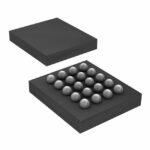 SN74LVC373AGQNR

The activity of extra discounts on wholesale prices is in full swing…
Please fill in your contact information and we will send you the latest wholesale price list.






