 ChipApex | Global Electronic Components Supplier

SEARCH
Search Product
Search Post
— IC芯片 | 连接器 | 传感器 | 被动器件 —
Search productSearch post
— IC芯片 | 连接器 | 传感器 | 被动器件 —
Consult the customer manager about the wholesale price.
consultation hotline:86-132-6715-2157
email:[email protected]
Contact the product manager for consultation. One-stop consultation is available.
Do you want a lower wholesale price? Please send us your inquiry and we will reply immediately.
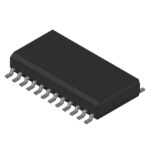
SN74LVT2952DW is listed in the Buffers, Drivers, Receivers, Transceivers range at ChipApex. The manufacturer field lists Texas Instruments. Its product description is REGISTERED BUS TRANSCEIVER. Review the specifications below when checking this part for your BOM.
The SN74LVT2952DW is an octal bus transceiver from Texas Instruments, belonging to the LVTH logic family. It features registered bidirectional data transmission with three-state outputs in a 20-pin SOIC package. The device operates within a supply voltage range of 2.7 V to 3.6 V and supports LVTTL input levels. Key electrical parameters include a propagation delay of 5.3 ns, a low-level output current of 64 mA, and a high-level output current of -32 mA. It functions as a non-inverting registered bus transceiver suitable for industrial temperature ranges.
Verify the specific suffix 'DW' corresponds to the SOIC-20 tube packaging when sourcing. Confirm the LVTH series designation matches the required registered functionality, distinguishing it from standard unregistered bus transceivers. Ensure the operating voltage range aligns with the system's 3.3V power domain specifications.
Select this component when registered data storage is required at the bus interface point. The LVTH series offers higher drive strength compared to standard LV devices. Consider the SOIC-20 package constraints for PCB layout. Verify that the 5.3 ns propagation delay meets the timing requirements of the target application.
This part belongs to the SN74LVTH2952 family of registered bus transceivers. It serves as a bridge between microprocessors and peripheral devices, providing both signal buffering and data retention. The device integrates eight D-type flip-flops to latch incoming data before driving the external bus lines.
The 'H' in SN74LVTH2952 indicates the use of Texas Instruments' High-Speed CMOS (HCT/LVTH) technology, which ensures compatibility with LVTTL input voltage levels, whereas standard LVT parts may have different input threshold characteristics.
Yes, it is a bidirectional bus transceiver controlled by a direction pin that determines whether data flows from port A to port B or vice versa.
Explore related parts through Logic, Integrated Circuits (ICs), all product categories, ChipApex homepage.
 SN74LVT2952DW

The activity of extra discounts on wholesale prices is in full swing…
Please fill in your contact information and we will send you the latest wholesale price list.





