 ChipApex | Global Electronic Components Supplier
SEARCH
Search Product
Search Post
— IC芯片 | 连接器 | 传感器 | 被动器件 —
Search productSearch post
— IC芯片 | 连接器 | 传感器 | 被动器件 —
Consult the customer manager about the wholesale price.
consultation hotline:86-132-6715-2157
email:[email protected]
Contact the product manager for consultation. One-stop consultation is available.
Do you want a lower wholesale price? Please send us your inquiry and we will reply immediately.
The SN74V273-15GGM is a high-speed, deep CMOS first-in, first-out (FIFO) memory fabricated using submicron technology. It provides a data organization of 16384 x 18 or 32768 x 9 bits and operates at frequencies up to 166 MHz with a 6-ns read/write cycle time. The device supports user-selectable input and output bus sizing for flexible data flow matching. It features independent read and write clocks, allowing simultaneous operations. Key functional attributes include big-endian/little-endian byte representation, zero-latency retransmit, and programmable almost-empty/full flags.
Verify the specific suffix '15GGM' against official Texas Instruments documentation to confirm exact package type and availability. Ensure the selected variant matches the required pinout and electrical specifications for your design. Cross-reference the datasheet revision date to confirm current production status and parameter validity before finalizing procurement.
Select this component when designing systems that require deep memory buffering with independent clock domains. Consider the SN74V273 family if you need flexible bus matching capabilities between different data widths. Evaluate the programmable flag options to determine if the default offsets meet your system requirements or if custom configuration is necessary during initialization.
This part belongs to the SN74V263, SN74V273, SN74V283, and SN74V293 family of 3.3-V CMOS FIFO memories. These devices are designed for high-performance applications requiring substantial data buffering. The family shares common architectural features such as submicron CMOS technology and glueless interface capabilities with DSPs, differing primarily in memory depth and organization.
SN74V263
In FWFT mode, the first word written to an empty FIFO appears on the outputs after three RCLK transitions without requiring REN assertion. In standard mode, every word, including the first, requires a read operation initiated by REN and RCLK.
The RT input allows data to be reread from the FIFO more than once. Asserting RT low during a rising RCLK edge initializes the read pointer to the first memory location, enabling retransmission of previously read data without affecting the write pointer.
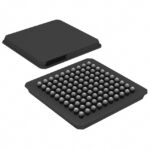 SN74V273-15GGM
The activity of extra discounts on wholesale prices is in full swing…
Please fill in your contact information and we will send you the latest wholesale price list.





