 ChipApex | Global Electronic Components Supplier
SEARCH
Search Product
Search Post
— IC芯片 | 连接器 | 传感器 | 被动器件 —
Search productSearch post
— IC芯片 | 连接器 | 传感器 | 被动器件 —
Consult the customer manager about the wholesale price.
consultation hotline:86-132-6715-2157
email:[email protected]
Contact the product manager for consultation. One-stop consultation is available.
Do you want a lower wholesale price? Please send us your inquiry and we will reply immediately.
The SN74V273-15PZA is a 3.3-V CMOS first-in, first-out (FIFO) memory from the SN74V273 family, fabricated using high-performance submicron technology. It provides a storage capacity of 16384 x 18 bits and supports operation up to 166 MHz with a 6-ns read/write cycle time. The device features user-selectable input and output bus sizing for ×9 or ×18 configurations, big-endian/little-endian byte representation, and independent read and write clocks. It includes programmable almost-empty and almost-full flags, selectable standard or first-word fall-through timing modes, and retransmit capabilities.
Verify the specific suffix '15' against official Texas Instruments documentation, as it may indicate a specific temperature grade, packaging variant, or internal revision not explicitly detailed in the general SN74V273 datasheet. Confirm availability status directly with the manufacturer or authorized distributors, as lead times and stock levels are subject to change. Ensure the PZA package type matches your PCB footprint requirements.
Select this component when designing systems requiring deep FIFO buffering with asynchronous clock domain crossing capabilities. It is suitable for applications needing configurable bus widths to interface between 9-bit and 18-bit data paths. Consider the 3.3-V supply voltage and 5-V tolerant inputs if interfacing with legacy logic families. Evaluate the need for programmable flags and retransmit functions for complex data handling scenarios.
The SN74V273-15PZA belongs to the SN74V273 series of high-speed CMOS FIFO memories produced by Texas Instruments. This series is designed for high-performance digital signal processing and communication applications. The device utilizes advanced submicron CMOS technology to achieve low power consumption and high speed. It is part of a broader family including SN74V263, SN74V283, and SN74V293, which offer different memory depths.
SN74V273PZ: Standard commercial version of the same FIFO family with identical functional specifications but potentially different environmental ratings or packaging options. Verify pinout compatibility and electrical characteristics before substitution.
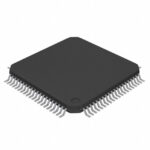 SN74V273-15PZA
The activity of extra discounts on wholesale prices is in full swing…
Please fill in your contact information and we will send you the latest wholesale price list.





