 ChipApex | Global Electronic Components Supplier
SEARCH
Search Product
Search Post
— IC芯片 | 连接器 | 传感器 | 被动器件 —
Search productSearch post
— IC芯片 | 连接器 | 传感器 | 被动器件 —
Consult the customer manager about the wholesale price.
consultation hotline:86-132-6715-2157
email:[email protected]
Contact the product manager for consultation. One-stop consultation is available.
Do you want a lower wholesale price? Please send us your inquiry and we will reply immediately.
The SN74V3680-15PEU is a 3.3-V CMOS first-in, first-out (FIFO) memory with a 16384 x 36 bit organization and 576 kbit capacity. It operates at a maximum clock frequency of 66.7 MHz with a 10 ns access time. The device supports independent read and write clocks, user-selectable bus sizing, and big-endian/little-endian formats. It features programmable flags, zero-latency retransmit, and First-Word Fall-Through modes. Power supply ranges from 3.15 V to 3.45 V, with a maximum current of 40 mA. It is housed in a 128-pin LQFP package.
Verify the specific ordering suffix PEU corresponds to the 128-pin Thin Quad Flat Pack (TQFP) package configuration. Confirm that the -15 speed grade matches the required 66.7 MHz operational frequency for your design. Ensure the 3.3-V power supply requirements align with your system voltage rails before procurement.
Select this component when deep memory depth of 16384 words is required alongside wide 36-bit data paths. Consider its compatibility with high-speed submicron CMOS technology for demanding throughput applications. Evaluate the need for independent clock domains and programmable flag thresholds to determine if this specific FIFO architecture fits your interface requirements.
This part belongs to the SN74V36x0 family of 3.3-V CMOS FIFO memories. Other members include SN74V3640 through SN74V3690, offering varying depths from 1024 to 32768 words. All share similar functional characteristics but differ in storage capacity and pin configurations suitable for different density needs.
Direct substitutes within the same family include SN74V3640, SN74V3650, SN74V3660, SN74V3670, and SN74V3690. These parts offer identical functionality but with different memory depths. Verify pinout compatibility and electrical specifications before substitution.
In standard mode, every word requires a read enable signal to be accessed. In First-Word Fall-Through (FWFT) mode, the first word written to an empty FIFO appears on the outputs automatically after three clock cycles without requiring a read enable signal.
The almost-empty and almost-full flags can be programmed via parallel loading using data inputs or serial loading using the serial input pin. Eight default offset settings are also available during master reset.
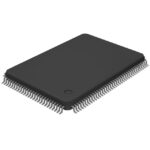 SN74V3680-15PEU
The activity of extra discounts on wholesale prices is in full swing…
Please fill in your contact information and we will send you the latest wholesale price list.





