 ChipApex | Global Electronic Components Supplier
SEARCH
Search Product
Search Post
— IC芯片 | 连接器 | 传感器 | 被动器件 —
Search productSearch post
— IC芯片 | 连接器 | 传感器 | 被动器件 —
Consult the customer manager about the wholesale price.
consultation hotline:86-132-6715-2157
email:[email protected]
Contact the product manager for consultation. One-stop consultation is available.
Do you want a lower wholesale price? Please send us your inquiry and we will reply immediately.
The SN75178BDR is a differential bus repeater manufactured by Texas Instruments, designed for one-way data communication on multipoint bus transmission lines. It meets EIA Standards RS-422-A and RS-485 and CCITT Recommendations V.11 and X.27. The device operates from a single 5-V supply with a voltage range of 4.75 V to 5.25 V. It features 3-state outputs, positive and negative current limiting, and driver thermal shutdown protection. The receiver input impedance is at least 12 kΩ with an input sensitivity of ±200 mV over a common-mode input voltage range of –7 V to 12 V. The driver output capability reaches up to 60 mA maximum.
Verify the specific ordering suffix 'DR' corresponds to the SOIC-8 surface-mount package and tape-and-reel carrier format. Confirm that the component status aligns with production requirements, as datasheet references may indicate legacy status or obsolescence for certain variants within the SN7517x family. Ensure compatibility with the target PCB footprint and reflow soldering profile.
Select the SN75178BDR when a non-inverting enable signal is required for the bus repeater function. This part complements the SN75177B, which has an active-low enable, allowing them to be used together for bidirectional communication. Verify that the application requires a single-direction repeater stage rather than a full transceiver, and ensure the bus topology supports the specified common-mode voltage range.
The SN75178B is part of the SN7517x series of differential bus repeaters. It is functionally identical to the SN75177B except for the polarity of its enable input. These devices are intended to improve data communication performance over long bus lines and are designed to work optimally with other components in the SN7517x family, such as the SN75172, SN75174, SN75173, SN75175, and SN75176B.
The SN75177B is the complementary counterpart in the same family, distinguished by its active-low enable input. Direct substitution requires verifying if the system design accommodates the inverted enable logic. No other direct pin-to-pin replacements are confirmed in the provided documentation.
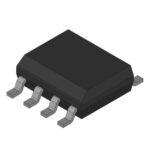 SN75178BDR
The activity of extra discounts on wholesale prices is in full swing…
Please fill in your contact information and we will send you the latest wholesale price list.





