 ChipApex | Global Electronic Components Supplier
SEARCH
Search Product
Search Post
— IC芯片 | 连接器 | 传感器 | 被动器件 —
Search productSearch post
— IC芯片 | 连接器 | 传感器 | 被动器件 —
Consult the customer manager about the wholesale price.
consultation hotline:86-132-6715-2157
email:[email protected]
Contact the product manager for consultation. One-stop consultation is available.
Do you want a lower wholesale price? Please send us your inquiry and we will reply immediately.
The SN75DP119RGYR is a DisplayPort signal repeater and conditioner manufactured by Texas Instruments. It supports DisplayPort versions 1.1a, 1.2, and 1.2a with data rates up to 8.1 Gbps per lane. The device operates on a single 3.3 V supply voltage and includes an integrated 1.2 V LDO regulator for internal logic power. It features a 48-pin VQFN package measuring 7x7 mm with a maximum height of 0.9 mm. The component functions as a 1:1 signal repeater, providing signal conditioning to extend cable lengths and maintain link integrity in display applications.
Verify the specific suffix RGYR confirms the tape and reel packaging format required for automated assembly processes. Confirm that the 48-pin VQFN footprint matches the target PCB layout dimensions. Ensure the design accounts for the 3.3 V supply requirement and thermal dissipation characteristics associated with the active signal repeater function during operation.
Select this component when signal degradation requires active regeneration rather than passive extension. The integrated LDO simplifies power rail design by eliminating the need for a separate 1.2 V supply. Consider the 7x7 mm package size for space-constrained designs. Verify compatibility with the specific DisplayPort version requirements of the host system to ensure proper data rate support.
This part belongs to the SN75DP1xx series of DisplayPort interface controllers from Texas Instruments. It serves as a specialized solution for maintaining signal integrity in high-bandwidth video transmission paths. The device complements other interface components by handling the physical layer requirements for reliable digital video communication over extended distances or complex routing topologies.
The SN75DP118 is a related repeater variant within the same family. Verify functional equivalence regarding supported data rates and pin compatibility before substitution. Cross-reference datasheet specifications to ensure the alternative meets the specific signal conditioning requirements of the application.
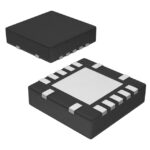 SN75DP119RGYR
The activity of extra discounts on wholesale prices is in full swing…
Please fill in your contact information and we will send you the latest wholesale price list.





