 ChipApex | Global Electronic Components Supplier

SEARCH
Search Product
Search Post
— IC芯片 | 连接器 | 传感器 | 被动器件 —
Search productSearch post
— IC芯片 | 连接器 | 传感器 | 被动器件 —
Consult the customer manager about the wholesale price.
consultation hotline:86-132-6715-2157
email:[email protected]
Contact the product manager for consultation. One-stop consultation is available.
Do you want a lower wholesale price? Please send us your inquiry and we will reply immediately.
The SNJ54BCT541J is an octal buffer and line driver featuring three-state outputs, manufactured using state-of-the-art BiCMOS technology. It operates within a supply voltage range of 4.5 V to 5.5 V and supports an operating temperature range from -55°C to 125°C. The device utilizes a 20-pin Ceramic Dual In-Line Package (CDIP). Key electrical characteristics include a low-level output current capability of 48 mA and a high-level output current of -12 mA at 4.5 V. Propagation delays are specified with maximum values of 6.3 ns for tPLH and 8.7 ns for tPHL under standard test conditions.
Verify the specific ordering suffix 'J' corresponds to the CDIP package variant. Confirm military-grade qualification requirements if applicable, as indicated by the SNJ prefix. Check for RoHS compliance status, noting that this specific ceramic package may not adhere to standard lead-free directives compared to commercial plastic packages. Ensure design compatibility with the -55°C to 125°C temperature rating.
Select this component for designs requiring robust drive strength and wide thermal tolerance. The BiCMOS technology offers significantly reduced quiescent current compared to older logic families. Consider the physical dimensions of the 20-CDIP package for board space constraints. Verify that the input voltage levels align with the system's logic standards, as the device accepts TTL-compatible inputs.
This part belongs to the SN54BCT541 family, which includes commercial variants like the SN74BCT541A. The SNJ designation typically indicates a military or aerospace-grade version produced under specific quality controls. It shares functional similarities with other octal buffers but distinguishes itself through its packaging and extended temperature specifications suitable for harsh environments.
SNJ54BCT541W
To ensure the high-impedance state during power up or power down, the OE inputs should be tied to VCC through a pullup resistor.
The 3-state control gate consists of two active-low inputs; if either OE1 or OE2 is high, all eight outputs enter the high-impedance state.
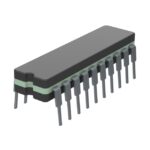 SNJ54BCT541J

The activity of extra discounts on wholesale prices is in full swing…
Please fill in your contact information and we will send you the latest wholesale price list.





