 ChipApex | Global Electronic Components Supplier

SEARCH
Search Product
Search Post
— IC芯片 | 连接器 | 传感器 | 被动器件 —
Search productSearch post
— IC芯片 | 连接器 | 传感器 | 被动器件 —
Consult the customer manager about the wholesale price.
consultation hotline:86-132-6715-2157
email:[email protected]
Contact the product manager for consultation. One-stop consultation is available.
Do you want a lower wholesale price? Please send us your inquiry and we will reply immediately.
The SNJ54F245J is an octal bus transceiver featuring three-state outputs, designed for asynchronous communication between data buses. It facilitates bidirectional data transmission between the A and B buses based on the logic level at the direction-control (DIR) input. The output enable (OE) input isolates the buses when disabled. This device belongs to the F/FAST logic series and is characterized for operation over the full military temperature range of -55 °C to 125 °C. It utilizes a 20-pin Ceramic Dual In-Line Package (CDIP).
Verify that the specific part number SNJ54F245J corresponds to the ceramic dual in-line package variant intended for military specifications. Confirm the operating temperature range matches the required -55 °C to 125 °C specification. Ensure compatibility with existing board layouts utilizing the 20-pin CDIP footprint. Validate that the F/FAST logic family characteristics align with system timing requirements.
Select this component when military-grade reliability and wide temperature tolerance are mandatory. The SNJ54F245J is suitable for applications requiring robust bidirectional bus driving capabilities. Consider the ceramic packaging for enhanced durability in harsh environments compared to plastic alternatives. Ensure the design accommodates the specific pinout and electrical characteristics defined for the F-series logic family.
This component is part of the SN54F245 family of octal bus transceivers manufactured by Texas Instruments. The 'SNJ' prefix indicates a military-qualified version housed in a ceramic dual in-line package. It shares functional similarities with commercial variants like the SN74F245 but offers extended environmental resilience. The device serves as a critical interface element in complex digital systems requiring isolated bidirectional data paths.
Direct replacements include other military-qualified variants within the same family, such as SNJ54F245W or SNJ54F245FK, provided the package type matches the application constraints. Cross-family substitutions require careful evaluation of switching speeds and drive currents.
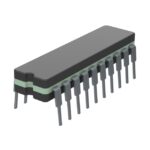 SNJ54F245J

The activity of extra discounts on wholesale prices is in full swing…
Please fill in your contact information and we will send you the latest wholesale price list.





