 ChipApex | Global Electronic Components Supplier
SEARCH
Search Product
Search Post
— IC芯片 | 连接器 | 传感器 | 被动器件 —
Search productSearch post
— IC芯片 | 连接器 | 传感器 | 被动器件 —
Consult the customer manager about the wholesale price.
consultation hotline:86-132-6715-2157
email:[email protected]
Contact the product manager for consultation. One-stop consultation is available.
Do you want a lower wholesale price? Please send us your inquiry and we will reply immediately.
The SNJ54HC164W is an 8-bit parallel-out serial shift register manufactured by Texas Instruments. It features AND-gated serial inputs (A and B) and an asynchronous clear (CLR) input. The device operates within a supply voltage range of 2 V to 6 V and supports an operating temperature range from -55°C to 125°C. It utilizes a 14-pin Ceramic Flat Pack (CFP) package with dimensions of 9.21 mm x 6.29 mm. Key electrical characteristics include a typical propagation delay of 20 ns, low power consumption with a maximum ICC of 80 µA at 6 V across the extended temperature range, and output drive capabilities of ±4 mA at 5 V.
Verify the specific ordering suffix 'W' corresponds to the CFP package when sourcing. Confirm compliance requirements such as MIL-PRF-38535 if applicable, as production processing varies. Check the latest Package Option Addendum for current status and availability details. Ensure environmental specifications match the intended operational temperature range.
Select this component for applications requiring serial-to-parallel conversion with direct clear functionality. Consider the CFP package for hermetic sealing needs in harsh environments. Verify that the input voltage levels are compatible with the driving logic family. Ensure the clock frequency remains within the specified limits for the chosen supply voltage.
This part belongs to the SN54HC164 series, which includes variants like SN74HC164. The SN54 designation indicates military-grade reliability standards compared to commercial SN74 counterparts. Other packages in the series include CDIP (J), LCCC (FK), SOIC (D), PDIP (N), and TSSOP (PW). The W suffix specifically denotes the Ceramic Flat Pack configuration.
SN54HC164J
Data enters the shift register only when both serial inputs A and B are high. A low signal on either input inhibits new data entry and resets the first flip-flop to low on the next clock pulse.
Data is clocked into the register on the low-to-high-level transition of the CLK pin.
The CLR input is active-low and asynchronous. Applying a low signal to CLR immediately sets all eight register outputs to a low level, regardless of the clock state.
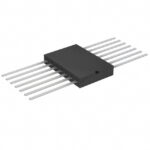 SNJ54HC164W
The activity of extra discounts on wholesale prices is in full swing…
Please fill in your contact information and we will send you the latest wholesale price list.





