 ChipApex | Global Electronic Components Supplier

SEARCH
Search Product
Search Post
— IC芯片 | 连接器 | 传感器 | 被动器件 —
Search productSearch post
— IC芯片 | 连接器 | 传感器 | 被动器件 —
Consult the customer manager about the wholesale price.
consultation hotline:86-132-6715-2157
email:[email protected]
Contact the product manager for consultation. One-stop consultation is available.
Do you want a lower wholesale price? Please send us your inquiry and we will reply immediately.
The SNJ54HC245FK is an octal bus transceiver with three-state outputs manufactured by Texas Instruments. It operates within a supply voltage range of 2 V to 6 V and supports bidirectional data transmission between two 8-bit buses (A and B). The device features direction control via the DIR input and output isolation via the OE input. It utilizes HC CMOS technology, providing high-current outputs capable of driving up to 15 LSTTL loads. The component is housed in a 20-pin Leadless Ceramic Chip Carrier (LCCC) package and is rated for operation across a temperature range of -55°C to 125°C.
Verify that the specific ordering suffix FK corresponds to the 20-pin LCCC package configuration. Confirm compliance requirements, as military-grade variants may have distinct testing protocols compared to standard production processing. Ensure the procurement channel provides documentation verifying the part's status and material composition against current datasheet specifications.
Select this component for asynchronous two-way communication interfaces requiring wide voltage tolerance and robust drive strength. The HC series offers balanced output drive with slower edge rates to minimize ringing, making it suitable for applications where signal integrity on bus lines is critical. Consider the thermal resistance and package size constraints associated with the ceramic LCCC form factor during PCB layout.
This device belongs to the SNx4HC245 family of octal bus transceivers. It shares functional similarities with other members like the SNJ54HC245J and SNJ54HC245W, differing primarily in the physical package type. The FK suffix specifically denotes the 20-pin LCCC package variant designed for high-reliability applications.
SNJ54HC245J
Bus isolation is achieved by asserting the Output Enable (OE) input high. This places the outputs in a high-impedance state, effectively disconnecting the A and B buses.
The Direction (DIR) input controls the data flow. A high level on DIR allows data transmission from the A bus to the B bus, while a low level allows transmission from the B bus to the A bus.
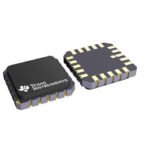 SNJ54HC245FK

The activity of extra discounts on wholesale prices is in full swing…
Please fill in your contact information and we will send you the latest wholesale price list.





