 ChipApex | Global Electronic Components Supplier
SEARCH
Search Product
Search Post
— IC芯片 | 连接器 | 传感器 | 被动器件 —
Search productSearch post
— IC芯片 | 连接器 | 传感器 | 被动器件 —
Consult the customer manager about the wholesale price.
consultation hotline:86-132-6715-2157
email:[email protected]
Contact the product manager for consultation. One-stop consultation is available.
Do you want a lower wholesale price? Please send us your inquiry and we will reply immediately.
The SNJ54LS166AFK is a military-grade, eight-bit parallel-in serial-out shift register manufactured by Texas Instruments. It operates within an extended temperature range of -55°C to 125°C and utilizes the LS logic series for standard switching performance. The device is housed in a 20-pin LCCC (Leadless Ceramic Chip Carrier) package with a 1.27 mm lead pitch. Key functional features include a dedicated serial data input, a clock enable control, and a parallel load capability that allows direct data entry into the internal flip-flops.
Verify the NRND status before finalizing design implementations. Confirm the specific ordering suffix matches the required package variant. Ensure environmental compliance documentation aligns with project specifications. Validate the operating temperature range against the intended deployment conditions. Review the manufacturer's product life cycle notifications for potential obsolescence risks.
Select this component when military-grade reliability and wide temperature tolerance are mandatory. Compare against commercial variants if extreme environmental conditions are not present. Evaluate the LCCC package suitability for the target PCB assembly process. Consider the LS logic family speed characteristics relative to the system clock frequency requirements.
This part belongs to the SN54LS166A family of shift registers designed for defense and aerospace markets. It shares core functionality with commercial counterparts but adheres to stricter manufacturing and testing standards. The LCCC package provides hermetic sealing suitable for harsh environments. It serves as a critical interface between parallel data buses and serial communication lines.
SNJ54LS166AJ
The clock enable input controls whether the shift register advances its state on the rising edge of the clock signal, allowing synchronization with external timing events.
When the parallel load input is activated, the data present at the eight parallel input pins is transferred directly into the internal flip-flops, overriding the shifting operation.
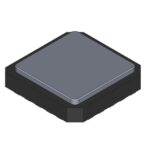 SNJ54LS166AFK
The activity of extra discounts on wholesale prices is in full swing…
Please fill in your contact information and we will send you the latest wholesale price list.







