 ChipApex | Global Electronic Components Supplier

SEARCH
Search Product
Search Post
— IC芯片 | 连接器 | 传感器 | 被动器件 —
Search productSearch post
— IC芯片 | 连接器 | 传感器 | 被动器件 —
Consult the customer manager about the wholesale price.
consultation hotline:86-132-6715-2157
email:[email protected]
Contact the product manager for consultation. One-stop consultation is available.
Do you want a lower wholesale price? Please send us your inquiry and we will reply immediately.
The SNJ54LS244J is an octal buffer and line driver manufactured by Texas Instruments, featuring three-state outputs. It operates within a supply voltage range of 4.5 V to 5.5 V and supports a maximum propagation delay of 15 ns at 5 V. The device utilizes PNP inputs to reduce DC loading and includes hysteresis at the input pins to improve noise margins. Designed for military-grade reliability, it functions across an extended temperature range from -55°C to +125°C. The component is housed in a 20-lead ceramic dual in-line package (CDIP) suitable for through-hole mounting.
Verify the specific datasheet revision and manufacturing lot details before procurement, as legacy military-grade components may have varying production statuses. Confirm that the CDIP-20 ceramic package meets the mechanical requirements of the target assembly. Ensure compatibility with existing board layouts regarding pin spacing and thermal characteristics. Cross-reference the part number suffixes to confirm exact electrical specifications and packaging options available from authorized distributors.
Select this component when high fan-out and improved density are required for memory address or clock distribution. The PNP input design offers advantages over standard TTL inputs by reducing DC loading. Consider the extended temperature range and robust noise margins for harsh environments. Verify that the unidirectional signal flow matches the system architecture, as this device does not support bidirectional data transfer.
This part belongs to the SNx4LS24x family of octal buffers and line drivers. It shares functional similarities with other devices in the series but is distinguished by its specific military-grade qualification and ceramic packaging. The SNJ54LS244J serves as a specialized solution for high-performance digital systems requiring reliable signal buffering and drive capabilities under demanding operational conditions.
Direct substitutes include other SN54LS244 variants with compatible pinouts and electrical characteristics. Verify that any replacement maintains the same CDIP-20 package dimensions and military temperature ratings. Ensure that the alternative device supports the required 3-state output functionality and input tolerance levels.
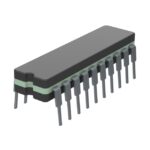 SNJ54LS244J

The activity of extra discounts on wholesale prices is in full swing…
Please fill in your contact information and we will send you the latest wholesale price list.





