ChipApex | Global Electronic Components Supplier
SEARCH
Search Product
Search Post
— IC芯片 | 连接器 | 传感器 | 被动器件 —
Search productSearch post
— IC芯片 | 连接器 | 传感器 | 被动器件 —
Consult the customer manager about the wholesale price.
consultation hotline:86-132-6715-2157
email:[email protected]
Contact the product manager for consultation. One-stop consultation is available.
Do you want a lower wholesale price? Please send us your inquiry and we will reply immediately.
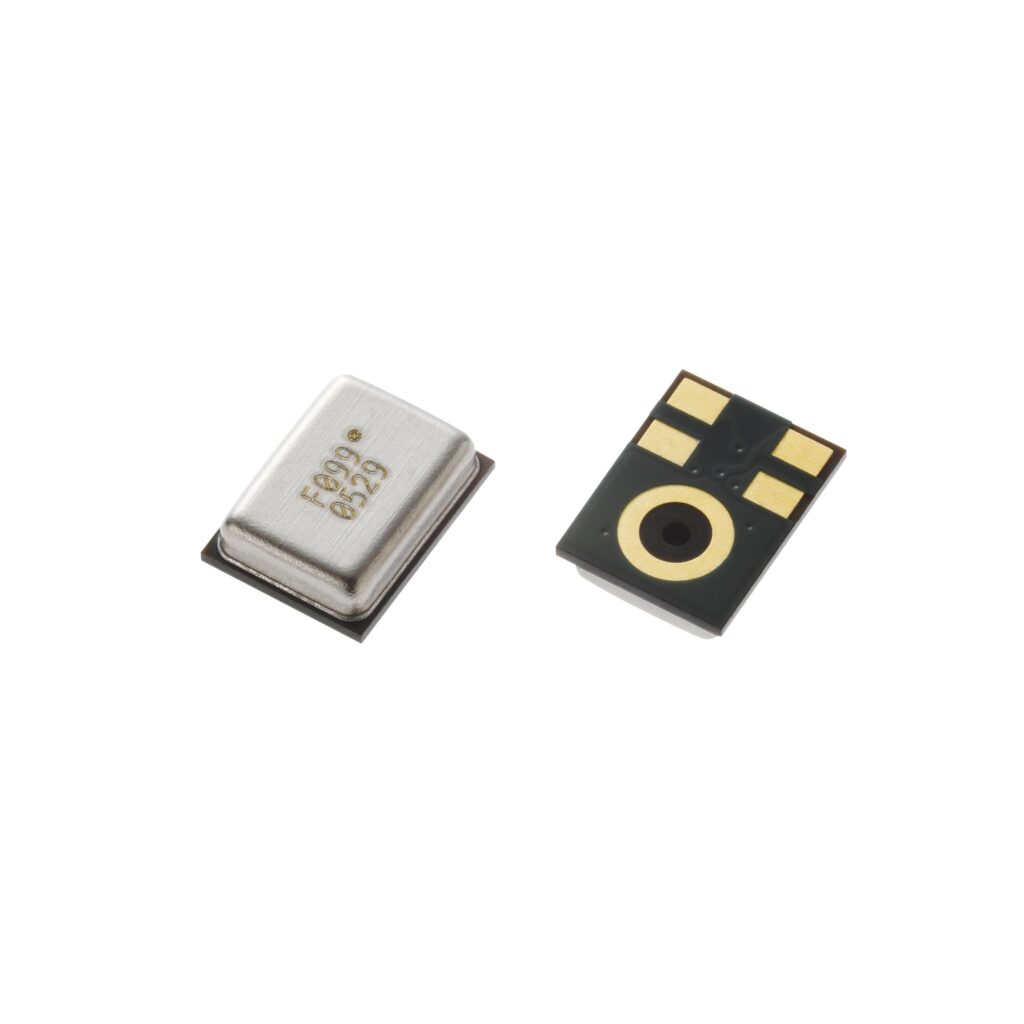
The Knowles SP0102BE3-5 is a silicon MEMS microphone designed for high-fidelity audio capture in mobile and wearable devices. It features an omnidirectional acoustic port configuration, ensuring consistent sensitivity across all angles of incidence. The device integrates a low-noise amplifier within the package to deliver a high signal-to-noise ratio, typically around 64 dB(A). It operates on a single supply voltage ranging from 1.6V to 3.6V, with a typical current consumption of 180µA. The component utilizes a digital PDM output interface, facilitating direct connection to host processors without requiring external analog-to-digital conversion.
Verify the specific suffix code against the manufacturer's latest datasheet to confirm pinout compatibility and acoustic specifications. Ensure that the ordering information matches the exact revision level required for your PCB layout. Cross-reference the RoHS compliance status and lead time availability directly with authorized distributors prior to finalizing procurement plans.
Select this component when a digital output interface is preferred over analog alternatives to reduce noise susceptibility in mixed-signal environments. Consider the operating voltage range and current consumption constraints of the target application. Evaluate the acoustic performance requirements, specifically the need for omnidirectional pickup patterns and high signal-to-noise ratios in noisy settings.
This model belongs to Knowles' series of silicon MEMS microphones engineered for consumer electronics. The series emphasizes miniaturization and power efficiency while maintaining professional-grade audio quality. These components are widely adopted in the mobile industry due to their robust manufacturing processes and consistent acoustic performance across production batches.
Consult official substitution guides for compatible parts within the same product family. Verify mechanical footprint and electrical parameter alignment before replacing existing units. Generic equivalents may not match the specific acoustic tuning or digital interface timing requirements.
 SP0102BE3-5
The activity of extra discounts on wholesale prices is in full swing…
Please fill in your contact information and we will send you the latest wholesale price list.