ChipApex | Global Electronic Components Supplier
SEARCH
Search Product
Search Post
— IC芯片 | 连接器 | 传感器 | 被动器件 —
Search productSearch post
— IC芯片 | 连接器 | 传感器 | 被动器件 —
Consult the customer manager about the wholesale price.
consultation hotline:86-132-6715-2157
email:[email protected]
Contact the product manager for consultation. One-stop consultation is available.
Do you want a lower wholesale price? Please send us your inquiry and we will reply immediately.
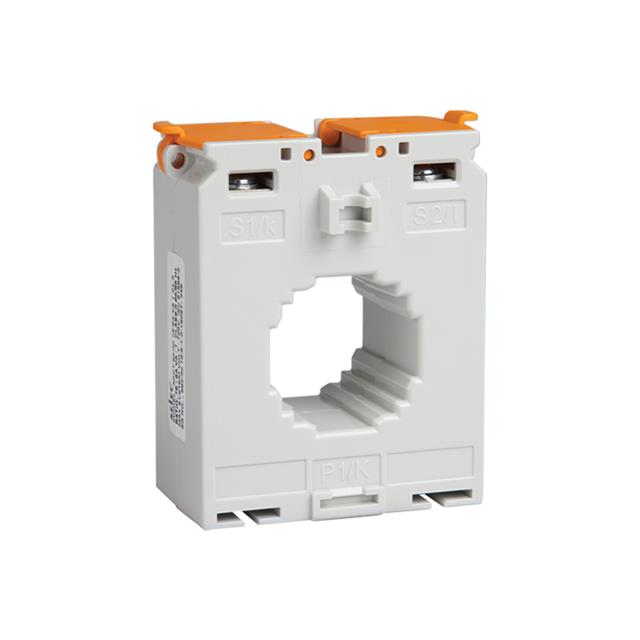
The Selec Controls SPCT 62/30 100/5 A VA 3 CL 1-CU-ROHS is a non-invasive solid core current transformer designed for DIN rail mounting. It features a bus bar configuration with an inner dimension of 62mm x 30mm, accommodating primary currents up to 100A. The device provides a secondary output ratio of 100:5A, ensuring accurate current sensing for metering applications. Rated at 3VA burden and Class 1 accuracy, it meets RoHS standards for environmental compliance.
Verify the specific ordering suffix matches the required accuracy class and burden rating. Confirm that the physical dimensions align with available DIN rail space. Ensure the primary current rating suits the load requirements. Check for RoHS compliance documentation if environmental regulations apply. Cross-reference the manufacturer part number with authorized distributor lists to avoid counterfeit components.
Select this component when a split-core or solid-core CT is not feasible due to space constraints. The 62mm x 30mm aperture requires sufficient clearance for the bus bar. Consider the 3VA burden limit when connecting to downstream meters. Verify that the Class 1 accuracy meets the precision requirements of the application. Ensure the operating temperature range aligns with the installation environment.
This model belongs to the SPCT series of bus bar current transformers from Selec Controls USA Inc. These devices are engineered for high-accuracy current measurement in industrial settings. The series offers various aperture sizes and ratios to suit different primary current levels. The SPCT 62/30 variant specifically targets applications requiring a 100A primary rating with compact DIN rail integration.
Public confirmed substitute part numbers are not available in the provided source material. Users should consult official Selec Controls documentation for cross-reference data. Direct replacement requires matching the inner dimensions, current ratio, and mounting type. Verify compatibility with existing metering infrastructure before substitution.
 SPCT 62/30 100/5 A VA 3 CL 1-CU-ROHS
The activity of extra discounts on wholesale prices is in full swing…
Please fill in your contact information and we will send you the latest wholesale price list.