 ChipApex | Global Electronic Components Supplier
SEARCH
Search Product
Search Post
— IC芯片 | 连接器 | 传感器 | 被动器件 —
Search productSearch post
— IC芯片 | 连接器 | 传感器 | 被动器件 —
Consult the customer manager about the wholesale price.
consultation hotline:86-132-6715-2157
email:[email protected]
Contact the product manager for consultation. One-stop consultation is available.
Do you want a lower wholesale price? Please send us your inquiry and we will reply immediately.
The SPX431LCN-L is a three-terminal adjustable shunt voltage regulator manufactured by Sipex, now part of Maxlinear. It functions as a precision parallel voltage reference with an integrated temperature-compensated bandgap reference of approximately 2.5V. The device incorporates an open-loop error amplifier to maintain stable regulation. It supports a wide operating current range up to 100mA and offers high thermal stability across its operational temperature range. The component is housed in an 8-pin SOIC package (PDSO8) and provides an adjustable output voltage capability when configured with external resistors.
Verify the manufacturer designation, as Sipex was acquired by Exar and subsequently Maxlinear. Confirm the specific suffix indicates the correct package type and lead-free status. Ensure compatibility with existing board layouts regarding the SOIC-8 footprint. Check for RoHS compliance documentation if required for your assembly process. Validate that the sourcing channel is an authorized distributor to guarantee component authenticity.
Select this component when a low-cost, adjustable shunt regulator is required instead of a fixed reference. Consider the 100mA current capability against your maximum load requirements. Evaluate the thermal performance needs given the SOIC-8 package size. Compare against standard TL431 equivalents if pinout or specific electrical characteristics differ slightly. Ensure the input voltage range accommodates the desired output adjustment range.
This device belongs to the SPX431 family of programmable shunt regulators. It serves as a direct functional replacement for industry-standard adjustable references like the TL431. The product line emphasizes cost-effective solutions for voltage regulation tasks in consumer and industrial electronics. Sipex's expertise in mixed-signal design ensures reliable performance in compact form factors.
The SPX431LCN-L is functionally equivalent to the TL431A and similar adjustable shunt regulators. Verify pin compatibility before substitution. Check if the alternative part meets the same thermal and current specifications. Ensure the replacement maintains the required accuracy and temperature coefficient for the application.
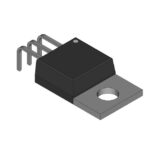 SPX431LCN-L
The activity of extra discounts on wholesale prices is in full swing…
Please fill in your contact information and we will send you the latest wholesale price list.





