ChipApex | Global Electronic Components Supplier
SEARCH
Search Product
Search Post
— IC芯片 | 连接器 | 传感器 | 被动器件 —
Search productSearch post
— IC芯片 | 连接器 | 传感器 | 被动器件 —
Consult the customer manager about the wholesale price.
consultation hotline:86-132-6715-2157
email:[email protected]
Contact the product manager for consultation. One-stop consultation is available.
Do you want a lower wholesale price? Please send us your inquiry and we will reply immediately.
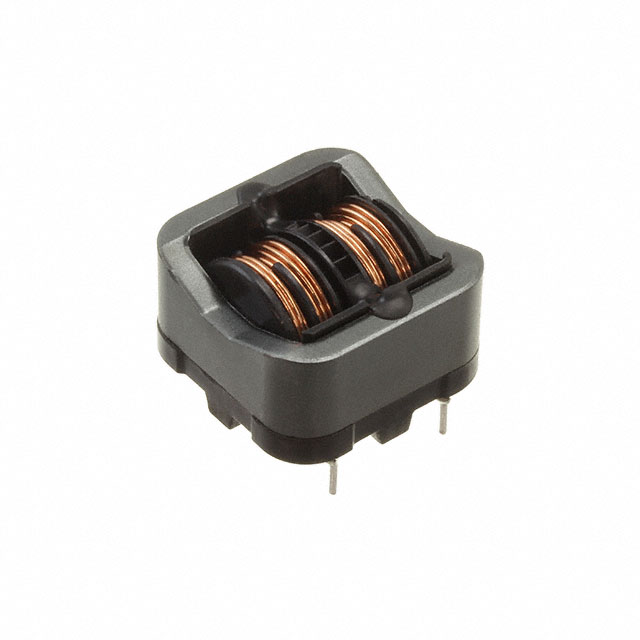
The KEMET SSRH24NH-12655 is a high impedance common mode choke designed for AC line filtering applications. It features a 65.5 mH inductance measured at 10 kHz and supports a maximum DC current of 1.2 A. The component has a maximum DC resistance (DCR) of 475 milliohms and is rated for 250 V AC. It utilizes a vertical through-hole package with four pins, measuring 25.50 mm in length and width, and up to 18.00 mm in height. The unit operates within a temperature range of -25°C to +120°C.
Verify the specific suffix NH against procurement requirements to ensure correct pin configuration and material specifications. Confirm RoHS3 compliance status if restricted substances are mandated. Cross-reference the manufacturer part number with distributor catalogs to validate current availability and lead times. Ensure the selected variant matches the required inductance and current ratings for the target circuit design.
Select this component when high inductance values are required for low-frequency noise attenuation in two-line AC circuits. The 1.2 A current rating determines the maximum load capacity before saturation effects degrade performance. Consider the physical dimensions and through-hole mounting style during mechanical layout planning. Verify that the 475 milliohm DCR aligns with acceptable power loss constraints in the application.
This component belongs to the KEMET SSRH series of common mode chokes, specifically the 24NV/NH family. These coils are engineered as high impedance filters for AC line applications. The series provides standardized form factors for reliable integration into power entry modules and filter assemblies. The SSRH designation indicates specific construction characteristics distinct from other KEMET inductor families.
Direct substitutes must match the 65.5 mH inductance, 1.2 A current rating, and 475 milliohm DCR. Verify identical vertical through-hole footprint dimensions of 25.50 mm x 25.50 mm. Ensure replacement parts maintain the same 250 V AC rating and operating temperature range. Consult manufacturer cross-reference lists for verified equivalent components.
 SSRH24NH-12655
The activity of extra discounts on wholesale prices is in full swing…
Please fill in your contact information and we will send you the latest wholesale price list.