ChipApex | Global Electronic Components Supplier
SEARCH
Search Product
Search Post
— IC芯片 | 连接器 | 传感器 | 被动器件 —
Search productSearch post
— IC芯片 | 连接器 | 传感器 | 被动器件 —
Consult the customer manager about the wholesale price.
consultation hotline:86-132-6715-2157
email:[email protected]
Contact the product manager for consultation. One-stop consultation is available.
Do you want a lower wholesale price? Please send us your inquiry and we will reply immediately.
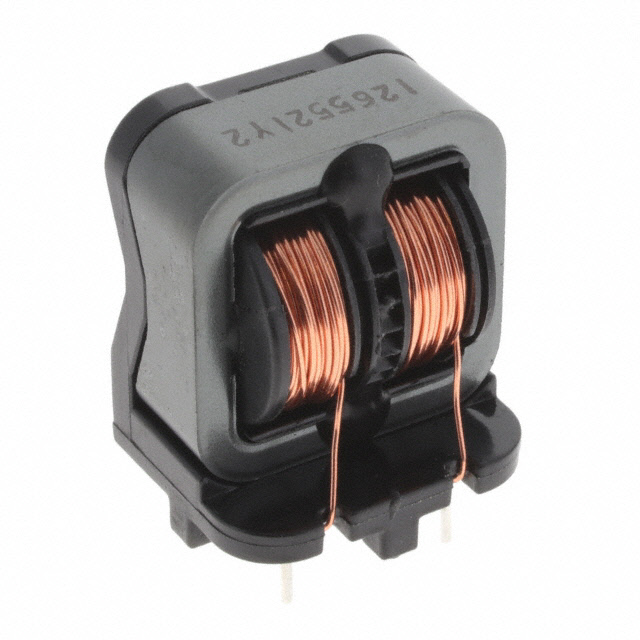
The KEMET SSRH24NV-12655 is a through-hole common mode choke designed for power line noise suppression. It features an inductance of 65.5 mH measured at 10 kHz and supports a maximum current rating of 1.2 A. The component has a maximum DC resistance (DCR) of 475 milliohms and is rated for 250 V AC. It utilizes high permeability ferrite S18H cores within a vertical package measuring 25.50 mm x 25.50 mm x 18.00 mm, operating reliably between -40°C and 125°C.
Verify the specific suffix designation when ordering, as the SSRH24NV series may have variations distinct from the SSRH24NH series regarding temperature ratings or material composition. Confirm that the required operating temperature range aligns with the -40°C to 125°C specification provided for this part number. Ensure compatibility with through-hole mounting processes and verify lead availability if sourcing from multiple distributors.
Select this component when a 65.5 mH inductance at 10 kHz is required for common mode noise attenuation on 250 V AC lines. The 1.2 A current rating and low DCR make it suitable for applications where minimal voltage drop is critical. Consider the physical dimensions and vertical pin configuration for PCB layout constraints. Verify that the S18H core material characteristics meet the specific frequency response needs of the target application.
This component belongs to the KEMET SSRH24NV/NH series of through-hole common mode chokes. These devices are engineered for general-purpose noise suppression in power circuits. The series is characterized by the use of high permeability ferrite materials to achieve high inductance values in a compact form factor. The SSRH24NV variant specifically denotes the version associated with the documented -40°C minimum operating temperature.
The SSRH24NH-12655 is listed as an alternative part number with identical electrical parameters including 65.5 mH inductance and 1.2 A rating. Verify if the NV and NH suffixes indicate differences in temperature range or manufacturing origin before substitution. No other direct substitutes are confirmed in the provided documentation.
 SSRH24NV-12655
The activity of extra discounts on wholesale prices is in full swing…
Please fill in your contact information and we will send you the latest wholesale price list.