ChipApex | Global Electronic Components Supplier
SEARCH
Search Product
Search Post
— IC芯片 | 连接器 | 传感器 | 被动器件 —
Search productSearch post
— IC芯片 | 连接器 | 传感器 | 被动器件 —
Consult the customer manager about the wholesale price.
consultation hotline:86-132-6715-2157
email:[email protected]
Contact the product manager for consultation. One-stop consultation is available.
Do you want a lower wholesale price? Please send us your inquiry and we will reply immediately.
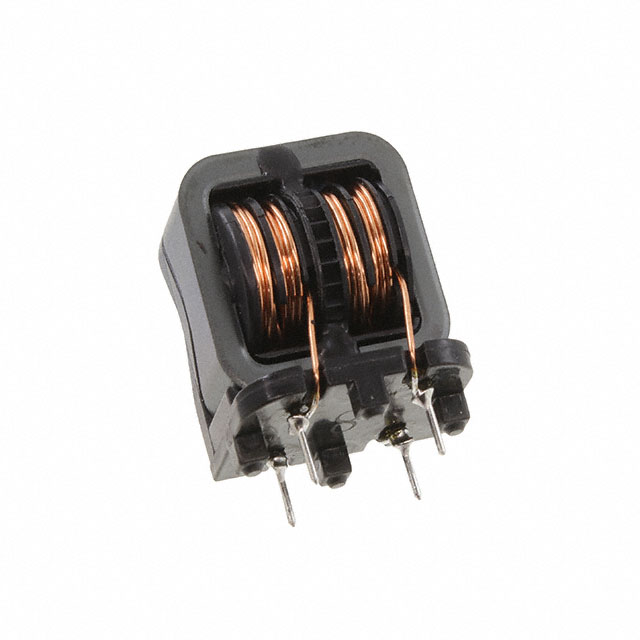
The KEMET SSRH24NV-16470 is a through-hole common mode choke from the SSRH series, designed for AC line filtering applications. It features an inductance of 47 mH at a test frequency of 10 kHz and supports a maximum DC current of 1.6 A. The component exhibits a typical DC resistance of 0.327 Ω and is rated for 250 VAC. Constructed with manganese-zinc ferrite core material, it operates within a temperature range of -25 °C to 120 °C. Physical dimensions are 25.5 mm in length, 20 mm in depth, and 31 mm in height.
Verify the specific suffix designation against official KEMET documentation to ensure exact electrical and mechanical compliance. Confirm that the required operating temperature range aligns with the specified -25 °C to 120 °C limit. Ensure the target application voltage does not exceed the 250 VAC rating. Cross-reference the physical footprint dimensions to validate compatibility with the intended PCB layout and hole spacing requirements before finalizing procurement decisions.
Select this component when high inductance values are required for effective low-frequency noise attenuation in single-phase AC circuits. The 1.6 A current rating suits moderate power applications where space constraints favor through-hole assembly over surface mount alternatives. Consider the physical size and lead spacing when designing boards with limited real estate or specific mechanical mounting needs.
This part belongs to the KEMET SSRH series of bobbin-wound common mode chokes. These components are engineered for robust performance in demanding environments, offering reliable noise reduction for sensitive electronic systems. The series utilizes advanced ferrite materials to achieve high permeability and stability across varying temperature conditions.
Consult official KEMET substitution guides for verified equivalents. Ensure any alternative maintains identical inductance, current rating, and physical dimensions to guarantee seamless integration without redesigning the host circuit board or mechanical housing structures.
The component utilizes manganese-zinc ferrite as its core material.
No, the specifications indicate it does not meet automotive standards.
 SSRH24NV-16470
The activity of extra discounts on wholesale prices is in full swing…
Please fill in your contact information and we will send you the latest wholesale price list.