 ChipApex | Global Electronic Components Supplier
SEARCH
Search Product
Search Post
— IC芯片 | 连接器 | 传感器 | 被动器件 —
Search productSearch post
— IC芯片 | 连接器 | 传感器 | 被动器件 —
Consult the customer manager about the wholesale price.
consultation hotline:86-132-6715-2157
email:[email protected]
Contact the product manager for consultation. One-stop consultation is available.
Do you want a lower wholesale price? Please send us your inquiry and we will reply immediately.
The SSX-750PBF is a programmable CMOS output clock oscillator manufactured by Citizen Finedevice Co Ltd. It operates within a frequency range of 1.0 to 125 MHz and features a nominal supply voltage of 3.3 V, with an acceptable range from 3.0 V to 3.6 V. The device exhibits a frequency stability of ±100 ppm and utilizes a base resonator crystal. Electrical characteristics include maximum rise and fall times of 6 ns, with an output load capacitance of 30 pF. The component supports enable/disable functionality and is housed in a 4-pin surface-mount ceramic package measuring 7.0 mm x 5.0 mm x 1.6 mm.
Verify that the ordered part number matches the exact suffix PBF, indicating lead-free compliance and specific packaging configuration. Confirm that the application environment remains within the specified operating temperature range of -20 °C to 70 °C. Ensure supply voltage does not exceed the maximum limit of 3.6 V to prevent device damage. Check for RoHS compliance documentation if regulatory adherence is required for the final assembly. Validate pin compatibility with the target PCB footprint before integration.
Select this component when a programmable CMOS oscillator is required for consumer or embedded applications. Consider the ±100 ppm frequency stability requirement against system timing tolerances. Evaluate the 3.3 V supply constraint against available power rails. Assess the physical dimensions of 7.0 mm x 5.0 mm against board space limitations. Verify that the enable/disable feature aligns with system power sequencing requirements.
The SSX-750PBF belongs to the SSX-750 series of programmable oscillators from Citizen Finedevice. This series is designed for compact surface-mount applications. The PBF suffix typically denotes lead-free construction and specific tape-and-reel packaging. It serves as a timing reference solution for modern electronics requiring small form factors and reliable performance.
Public confirmed substitute part numbers are not available in the provided documentation. Consult official manufacturer resources for cross-reference data.
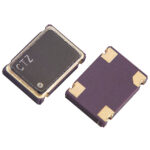 SSX-750PBF
The activity of extra discounts on wholesale prices is in full swing…
Please fill in your contact information and we will send you the latest wholesale price list.





