 ChipApex | Global Electronic Components Supplier
SEARCH
Search Product
Search Post
— IC芯片 | 连接器 | 传感器 | 被动器件 —
Search productSearch post
— IC芯片 | 连接器 | 传感器 | 被动器件 —
Consult the customer manager about the wholesale price.
consultation hotline:86-132-6715-2157
email:[email protected]
Contact the product manager for consultation. One-stop consultation is available.
Do you want a lower wholesale price? Please send us your inquiry and we will reply immediately.
The ST33HTPH2X32AHE1 is a Trusted Platform Module (TPM) 2.0 device from the STSAFE-TPM family, manufactured by STMicroelectronics. It integrates an Arm SecurCore SC300 processor core with flash-based memory to provide hardware-rooted security services compliant with TCG specifications. The component supports SPI communication interfaces and operates within a supply voltage range of 1.62 V to 3.6 V. Designed for industrial applications, it features extended temperature ranges and robust environmental protection mechanisms, including active shields and sensors, to ensure secure key storage and cryptographic operations in embedded systems.
Verify the specific suffix 'E1' against official STMicroelectronics documentation to confirm package type and tape/reel specifications, as suffix variations often denote distinct physical packaging or handling requirements. Cross-reference the manufacturer part number with authorized distributor catalogs to ensure availability and correct ordering parameters for production integration.
Select this component when a TCG-compliant TPM 2.0 solution with SPI interface is required for industrial-grade environments. Ensure the design accommodates the 1.62 V to 3.6 V supply voltage range and utilizes the Arm SecurCore SC300 architecture for efficient cryptographic processing. Confirm that the target application benefits from the device's EAL4+ augmented certification and FIPS 140-2 Level 2 capabilities.
This model belongs to the ST33HTPH2X series, which represents long-term evolution TPM 2.0 devices. The series is part of the broader STSAFE portfolio, designed to offer standardized security solutions for PC, mobile, and embedded computing applications. These devices are engineered to meet rigorous global security certifications and provide turnkey compliance for trusted platform implementations.
Direct substitutes within the same family include the ST33HTPH2X32AHE4 and ST33HTPH2X32AHD4, which share similar TPM 2.0 functionality and SPI interfaces. Verify pin compatibility and software library support before swapping, as packaging differences may require PCB layout adjustments.
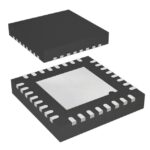 ST33HTPH2X32AHE1
The activity of extra discounts on wholesale prices is in full swing…
Please fill in your contact information and we will send you the latest wholesale price list.






