 ChipApex | Global Electronic Components Supplier

SEARCH
Search Product
Search Post
— IC芯片 | 连接器 | 传感器 | 被动器件 —
Search productSearch post
— IC芯片 | 连接器 | 传感器 | 被动器件 —
Consult the customer manager about the wholesale price.
consultation hotline:86-132-6715-2157
email:[email protected]
Contact the product manager for consultation. One-stop consultation is available.
Do you want a lower wholesale price? Please send us your inquiry and we will reply immediately.
The STDCQS1-16M is a surface-mount crystal resonator manufactured by NDK, belonging to the NX3225SA series. It operates at a fundamental frequency of 16 MHz with a frequency tolerance of ±15 ppm and stability of ±50 ppm. The component features an equivalent series resistance (ESR) of 120 Ohms and a load capacitance of 8 pF. It utilizes a 4-SMD, no-lead package measuring 3.20mm x 2.50mm x 0.60mm maximum height. Designed for automotive applications, it holds AEC-Q200 qualification and supports an extended operating temperature range from -40°C to +125°C.
Verify that the specific order matches the STDCQS1-16M designation to ensure AEC-Q200 automotive grade compliance. Confirm the required frequency tolerance and load capacitance align with the circuit design specifications. Check for RoHS3 compliance status if environmental regulations apply to the final assembly. Ensure storage conditions respect the MSL 1 rating to maintain solderability upon reflow.
Select this component when a 16 MHz reference signal is required in space-constrained automotive or industrial environments. The NX3225SA series offers a balance between size and performance, suitable for designs needing robust thermal stability. Compare ESR values against oscillator drive requirements to prevent over-driving. Consider the 120 Ohm ESR for impedance matching within the clock generation circuitry.
This part belongs to NDK's NX3225SA series of miniature crystal resonators. The series is engineered for high stability and accuracy in compact form factors. NDK leverages its expertise in artificial quartz crystal cultivation to produce components with consistent frequency characteristics. The STDCQS1 variant specifically targets automotive markets, adhering to strict quality and reliability standards defined by industry regulatory bodies.
Cross-reference with other NX3225SA series variants such as STDCQS1-12M or STDCQS1-20M if different frequencies are needed. Verify pin compatibility and electrical parameters before substituting with non-NDK equivalents. Ensure any replacement maintains the same AEC-Q200 certification level for automotive safety compliance.
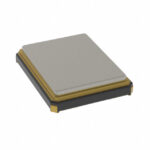 STDCQS1-16M

The activity of extra discounts on wholesale prices is in full swing…
Please fill in your contact information and we will send you the latest wholesale price list.




