ChipApex | Global Electronic Components Supplier

SEARCH
Search Product
Search Post
— IC芯片 | 连接器 | 传感器 | 被动器件 —
Search productSearch post
— IC芯片 | 连接器 | 传感器 | 被动器件 —
Consult the customer manager about the wholesale price.
consultation hotline:86-132-6715-2157
email:[email protected]
Contact the product manager for consultation. One-stop consultation is available.
Do you want a lower wholesale price? Please send us your inquiry and we will reply immediately.
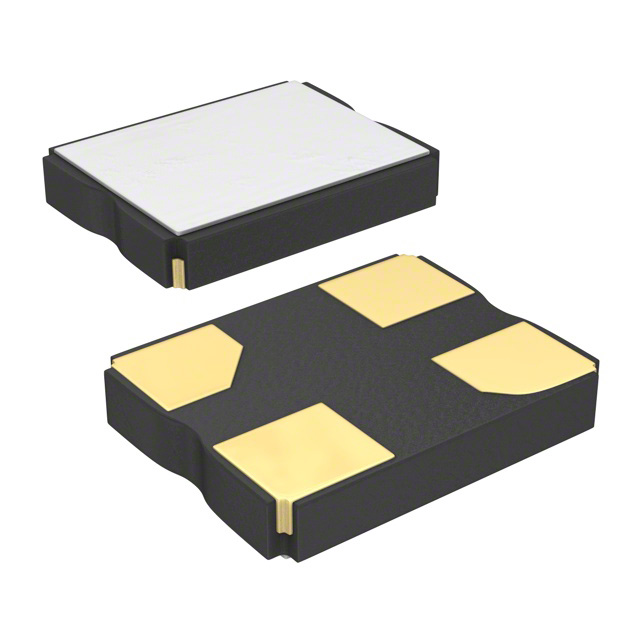
The STDCTX1-26M is a surface-mount crystal oscillator manufactured by NDK. It operates at a fundamental frequency of 26.000 MHz and utilizes an AT-cut quartz resonator element for stable timing performance. The component is housed in a compact SMD package, specifically the STDCT series form factor, designed for automated assembly processes. Key electrical specifications include a load capacitance of 7 pF and a frequency tolerance typically within ±30 ppm at room temperature. The device supports standard drive levels suitable for low-power mobile applications.
Verify the specific ordering suffix against the official NDK datasheet to ensure correct packaging quantity and tape-and-reel specifications. Confirm that the load capacitance matches the host circuit design requirements. Check for any RoHS or REACH compliance declarations relevant to your region. Ensure the operating temperature range aligns with the final product environment. Cross-reference the part number with authorized distributors to avoid counterfeit components.
Select this component when a 26 MHz reference is required for GSM or legacy wireless standards. Evaluate the package dimensions against available PCB real estate constraints. Consider the drive level sensitivity to prevent frequency pulling or damage. Compare equivalent parts from other manufacturers if supply chain diversification is necessary. Ensure the host oscillator circuit can support the specified load capacitance without additional tuning.
This part belongs to the STDCT series of surface-mount crystals from NDK. The series is characterized by small footprints and high reliability for consumer electronics. It serves as a passive timing element rather than an active oscillator IC. The 26 MHz frequency is historically significant for cellular baseband processing. It differs from active oscillators by requiring an external load circuit.
Consult NDK's official substitution guide for direct equivalents. Generic replacements must match the 26 MHz frequency, 7 pF load capacitance, and physical package dimensions. Verify that alternative brands offer comparable frequency stability and aging rates. Ensure the substitute part supports the same soldering thermal profiles.
 STDCTX1-26M

The activity of extra discounts on wholesale prices is in full swing…
Please fill in your contact information and we will send you the latest wholesale price list.