ChipApex | Global Electronic Components Supplier
SEARCH
Search Product
Search Post
— IC芯片 | 连接器 | 传感器 | 被动器件 —
Search productSearch post
— IC芯片 | 连接器 | 传感器 | 被动器件 —
Consult the customer manager about the wholesale price.
consultation hotline:86-132-6715-2157
email:[email protected]
Contact the product manager for consultation. One-stop consultation is available.
Do you want a lower wholesale price? Please send us your inquiry and we will reply immediately.
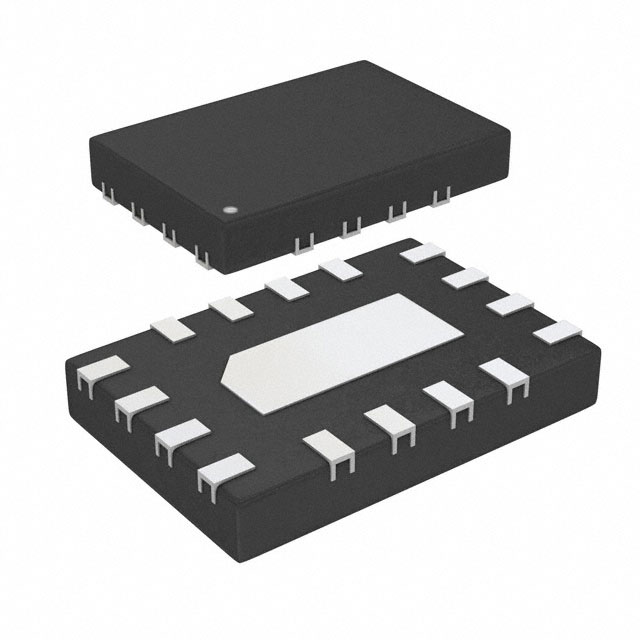
The STG3692QTR is a high-speed CMOS low voltage quad analog SPDT switch or 2:1 multiplexer/demultiplexer developed in silicon gate C2MOS technology. It operates from a supply voltage range of 1.65 V to 4.3 V, making it suitable for portable applications. The device features ultra-low power dissipation with a maximum supply current of 1 µA and low on-resistance up to 5.2 Ohms. Typical bandwidth reaches 500 MHz on all channels. Digital control inputs are 4.3 V tolerant and compatible with 1.8 V thresholds at VCC = 2.3 V to 3.0 V. Switching times include a maximum turn-on time of 20 ns and turn-off time of 17 ns. It operates within an industrial temperature range of -40°C to +85°C and is housed in a VFQFPN 16 package (2.6x1.8x0.5 mm).
Verify the specific ordering suffix and packaging configuration against official distributor catalogs to ensure compliance with tape and reel specifications. Confirm that the component meets Ecopack3 RoHS compliance requirements for your target market regulations. Cross-reference the manufacturer part number with authorized channel documentation to validate authenticity and traceability before finalizing procurement orders.
Select this component when designing circuits requiring four independent SPDT switches in a compact footprint. Ensure the system supply voltage remains within the 1.65 V to 4.3 V operational window. Verify that digital control logic levels align with the specified 1.8 V compatibility threshold at the required operating voltage conditions.
This component belongs to the STG3692 series of low voltage analog switches manufactured by STMicroelectronics. It utilizes silicon gate C2MOS technology to achieve high speed and low power consumption. The QTR suffix indicates the specific tape and reel packaging format used for automated surface-mount assembly processes.
The STG3682QTR serves as a dual-channel alternative within the same product family, offering similar electrical characteristics but with only two SPDT switches instead of four. Designers requiring fewer channels may consider this variant for space-constrained layouts while maintaining comparable bandwidth and voltage specifications.
 STG3692QTR
The activity of extra discounts on wholesale prices is in full swing…
Please fill in your contact information and we will send you the latest wholesale price list.