 ChipApex | Global Electronic Components Supplier
SEARCH
Search Product
Search Post
— IC芯片 | 连接器 | 传感器 | 被动器件 —
Search productSearch post
— IC芯片 | 连接器 | 传感器 | 被动器件 —
Consult the customer manager about the wholesale price.
consultation hotline:86-132-6715-2157
email:[email protected]
Contact the product manager for consultation. One-stop consultation is available.
Do you want a lower wholesale price? Please send us your inquiry and we will reply immediately.
The STG3699QTR is a quad analog single-pole double-throw (SPDT) switch manufactured by STMicroelectronics. It operates on a single supply voltage ranging from 1.65 V to 4.3 V and features an ultra-low on-resistance of less than 0.5 Ω at 3.0 V. The device provides four independent channels with break-before-make switching capabilities, ensuring signal integrity during transitions. It includes protection circuits against electrostatic discharge and transient voltages, supporting high-speed operation with typical propagation delays of 1.5 ns. The component is housed in a compact QFN package suitable for portable applications.
Verify the specific suffix 'QTR' against official datasheets to confirm reel packaging and tape specifications. Ensure compatibility with industrial temperature ranges if required. Cross-reference RoHS compliance status with current environmental declarations. Confirm availability through authorized distributors as stock levels fluctuate. Validate pinout configurations against schematic requirements before integration.
Select this component when low on-resistance and high bandwidth are critical for signal fidelity. Consider the 1.65 V to 4.3 V operating range for compatibility with various logic levels. Evaluate the QFN package size for space-constrained designs. Compare propagation delay specifications against system timing requirements. Assess power dissipation limits under maximum load conditions.
This part belongs to the STG3699 series of low-voltage analog switches. It shares architectural similarities with other members like the STG3699A and STG3699B but may differ in packaging or specific electrical tolerances. The series is designed for portable applications where power efficiency and signal integrity are paramount. Understanding the broader family helps in identifying compatible alternatives within the same product line.
The STG3699AUTR is a documented variant within the same series. Verify pin compatibility and electrical parameters before substitution. Check for differences in package dimensions and thermal characteristics. Ensure that any replacement meets the same voltage and current ratings.
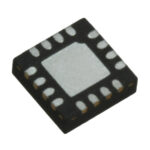 STG3699QTR
The activity of extra discounts on wholesale prices is in full swing…
Please fill in your contact information and we will send you the latest wholesale price list.





