 ChipApex | Global Electronic Components Supplier
SEARCH
Search Product
Search Post
— IC芯片 | 连接器 | 传感器 | 被动器件 —
Search productSearch post
— IC芯片 | 连接器 | 传感器 | 被动器件 —
Consult the customer manager about the wholesale price.
consultation hotline:86-132-6715-2157
email:[email protected]
Contact the product manager for consultation. One-stop consultation is available.
Do you want a lower wholesale price? Please send us your inquiry and we will reply immediately.
The STIPQ3M60T-HL is a SLLIMM nano 2nd series intelligent power module featuring a 3-phase inverter bridge with six N-channel MDmesh DM2 MOSFETs. It operates at 600 V blocking voltage and supports 3 A continuous current per device. The module integrates three half-bridge HVICs for gate driving, an operational amplifier, and a comparator for fault protection. Packaged in an N2DIP-26L type L tube, it provides low electromagnetic interference characteristics and optimized switching speed for compact motor drive designs.
Verify the specific ordering suffix 'HL' to confirm the N2DIP-26L type L package configuration and tube packing method. Ensure compatibility with the required thermal interface and mounting hardware for the screw-on heatsink design. Confirm that the application circuit adheres to the recommended decoupling and filtering guidelines to maintain signal integrity and prevent malfunctions.
Select this component for applications requiring a compact, fully isolated solution with integrated control logic. The inclusion of an op-amp allows for flexible current sensing configurations beyond standard protection limits. Consider the 1500 Vrms isolation rating when designing safety barriers. Verify that the operating junction temperature range of -40 to 150 °C meets the environmental requirements of the target system.
This part belongs to the SLLIMM nano 2nd series family from STMicroelectronics, designed for small low-loss intelligent molded modules. It utilizes MDmesh DM2 technology to achieve low on-resistance and improved switching performance compared to previous generations. The series targets home appliances and low-power industrial applications where space constraints are critical.
STIPQ3M60T-HZ is a confirmed substitute within the same datasheet, differing only in the N2DIP-26L type Z package variant. Both share identical electrical characteristics and pinouts. No other cross-model substitutes are documented in the provided source material.
The smart shutdown function immediately turns off the output gate drivers upon comparator triggering via a preferential path, independent of external RC network delays. This ensures rapid response to overcurrent faults.
The T/SD/OD pin serves multiple functions: it connects to the internal NTC thermistor for temperature monitoring, acts as an active-low shutdown logic input, and provides an open-drain output for the comparator fault signal.
Yes, the integration of specific HVICs allows for direct coupling to MCU terminals without the need for optocouplers, simplifying the board layout and reducing component count.
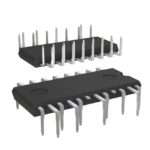 STIPQ3M60T-HL
The activity of extra discounts on wholesale prices is in full swing…
Please fill in your contact information and we will send you the latest wholesale price list.





