ChipApex | Global Electronic Components Supplier

SEARCH
Search Product
Search Post
Search productSearch post
Consult the customer manager about the wholesale price.
consultation hotline:86-132-6715-2157
email:[email protected]
Contact the product manager for consultation. One-stop consultation is available.
Do you want a lower wholesale price? Please send us your inquiry and we will reply immediately.
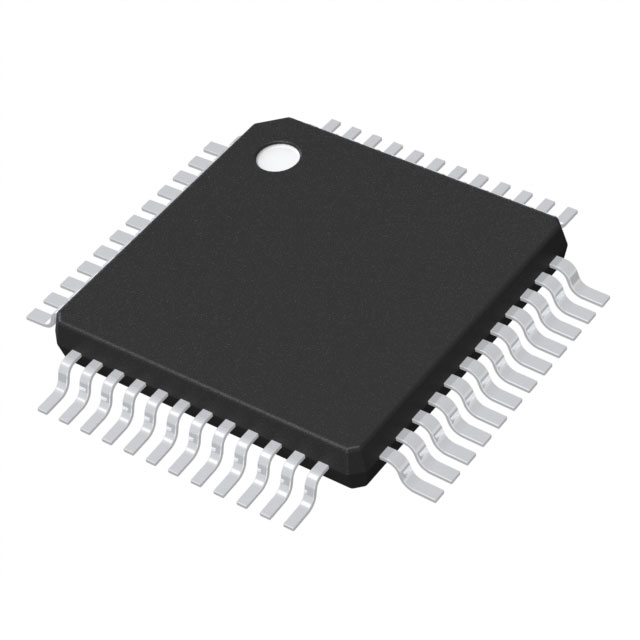
STM32F030CCT6TR is listed in the Microcontrollers range at ChipApex. The manufacturer field lists STMicroelectronics. Its product description is IC MCU 32BIT 256KB FLASH 48LQFP. Review the specifications below when checking this part for your BOM.
The STM32F030CCT6TR is a microcontroller unit based on the ARM Cortex-M0 core, operating at a maximum frequency of 48 MHz. It features 256 Kbytes of Flash memory and 32 Kbytes of SRAM with hardware parity. The device supports a supply voltage range of 2.4 V to 3.6 V and operates within an industrial temperature range of -40°C to +85°C. It includes a 12-bit ADC with up to 16 channels, multiple communication interfaces including I2C, SPI, and USART, and is housed in a 48-LQFP package.
Verify the specific suffix 'TR' indicates tape and reel packaging when sourcing components. Confirm that the part number corresponds to the 256 KB Flash variant within the STM32F030 series. Ensure compatibility with the required LQFP-48 footprint during PCB layout verification. Cross-reference the manufacturer's latest documentation for any updates regarding pinout or electrical characteristics.
Select this component for designs requiring substantial program memory and robust peripheral integration within the value line architecture. The 256 KB Flash size accommodates larger firmware libraries compared to lower-density variants. The inclusion of hardware parity check on SRAM enhances data integrity for critical industrial operations. Evaluate power consumption requirements against the available low-power modes supported by the Cortex-M0 core.
This device belongs to the STM32F0 series, which utilizes the ARM Cortex-M0 processor optimized for cost-sensitive and power-efficient embedded applications. The series offers a balance of performance and peripheral richness, targeting general-purpose microcontroller needs. The C6/C8/CC suffixes denote different memory densities within the same package family.
STM32F030C8T6TR: Offers identical pinout and functionality but with 128 KB Flash memory instead of 256 KB. Verify software compatibility if the application exceeds the smaller memory capacity.
Explore related parts through Embedded, Integrated Circuits (ICs), all product categories, ChipApex homepage.
STMicroelectronics STM32F030CCT6TR is typically reviewed in Microcontrollers category in embedded designs where boot behavior, debug access, and peripheral assumptions have to remain stable across layout and firmware revisions. Key specs include Description (IC MCU 32BIT 256KB FLASH 48LQFP), Core (ARM® Cortex®-M0), Speed (48MHz), Flash (256KB (256K x 8)), and RAM (32K x 8). On the assembled product, teams usually come back to i/o (37) before they treat the part as approved.
Any tips for migrating firmware to STM32F030CCT6TR?
Confirm pin functions, peripheral differences, timing assumptions, and memory layout, then validate under worst-case operating conditions.
Can you confirm the Supplier Device Package for STM32F030CCT6TR?
48-LQFP (7x7)
What is the core processor of STM32F030CCT6TR?
ARM® Cortex®-M0
Can you confirm the mounting type for STM32F030CCT6TR?
Surface Mount
In the Microcontrollers category, STMicroelectronics STM32F030CCT6TR is usually evaluated by whether it holds the same electrical, thermal, and mechanical assumptions once the part is on the assembled system. On released hardware, teams usually recheck core (ARM® Cortex®-M0), speed (48MHz), and flash (256KB (256K x 8)) first. Selection is driven by compute headroom, peripheral mix, toolchain maturity, lifecycle availability, and secure boot/update strategy. They commonly sit at the center of sensor fusion, protocol processing, or deterministic control loops where latency and reliability matter. In IoT deployments, low power and secure boot support long-life outdoor operation. In automotive and transportation, they manage gateways and subsystem controllers that must survive thermal cycling and support safety diagnostics. Compute control paths are usually judged by boot sequencing, debug access, and domain interaction because many field failures begin as recoverability problems rather than as outright functional failures.
 STM32F030CCT6TR

The activity of extra discounts on wholesale prices is in full swing…
Please fill in your contact information and we will send you the latest wholesale price list.