 ChipApex | Global Electronic Components Supplier

SEARCH
Search Product
Search Post
Search productSearch post
Consult the customer manager about the wholesale price.
consultation hotline:86-132-6715-2157
email:[email protected]
Contact the product manager for consultation. One-stop consultation is available.
Do you want a lower wholesale price? Please send us your inquiry and we will reply immediately.
STM32L552RET6 is listed in the Microcontrollers range at ChipApex. The manufacturer field lists STMicroelectronics. Its product description is IC MCU 32BIT 512KB FLASH 64LQFP. Review the specifications below when checking this part for your BOM.
The STM32L552RET6 is an ultra-low-power microcontroller based on the Arm Cortex-M33 core with TrustZone and FPU. It operates at up to 110 MHz, delivering 165 DMIPS. The device features 512 KB of Flash memory and 256 KB of SRAM. It includes an embedded SMPS step-down converter for optimized power efficiency. The package is LQFP64.
Verify the specific ordering suffix 'RET6' corresponds to the LQFP64 package and industrial temperature range in official ST documentation. Confirm the presence of the embedded SMPS as indicated by the 'E' suffix in the part number. Ensure compatibility with required voltage levels and pin configurations before procurement.
Select this model when high performance combined with ultra-low power consumption is required. The inclusion of TrustZone and hardware security accelerators makes it suitable for sensitive data processing. Consider the LQFP64 package constraints regarding available I/Os and physical space requirements for the design.
This component belongs to the STM32L552xx family within the STM32L5 series. It shares architectural similarities with other members like STM32L552CC or STM32L552ME but differs in package type and specific peripheral availability. The series is designed for IoT and industrial markets emphasizing security and energy efficiency.
Check for STM32L552RE variants with different packages if form factor changes are acceptable. Verify functional equivalence regarding security features and memory size when considering cross-family replacements.
Explore related parts through Embedded, Integrated Circuits (ICs), all product categories, ChipApex homepage.
STMicroelectronics STM32L552RET6 is typically reviewed in Microcontrollers category in embedded designs where boot behavior, debug access, and peripheral assumptions have to remain stable across layout and firmware revisions. Key specs include Description (IC MCU 32BIT 512KB FLASH 64LQFP), Core (ARM® Cortex®-M33), Speed (110MHz), Flash (512KB (512K x 8)), and RAM (256K x 8). In practice, the release review usually stays anchored on i/o (52).
Any tips for migrating firmware to STM32L552RET6?
Confirm pin functions, peripheral differences, timing assumptions, and memory layout, then validate under worst-case operating conditions.
Which Peripherals is listed for STM32L552RET6?
Brown-out Detect/Reset, DMA, PWM, etc.
What is the supply voltage of STM32L552RET6?
1.71V ~ 3.6V
What CPU core does STM32L552RET6 use?
ARM® Cortex®-M33
STMicroelectronics STM32L552RET6 in the Microcontrollers category is usually shortlisted only after engineers lock the released interface, margin, and field condition that will decide acceptance on assembled hardware. Once the part is on the shipped assembly, the first review usually comes back to core (ARM® Cortex®-M33), speed (110MHz), and flash (512KB (512K x 8)). They execute firmware or algorithms and coordinate peripherals, communications, and security features that define product capabilities. Selection is driven by compute headroom, peripheral mix, toolchain maturity, lifecycle availability, and secure boot/update strategy. Microcontrollers are usually released only after boot straps, reset timing, debug access, and power-domain behavior are checked on assembled hardware, because many field faults begin as recovery problems rather than obvious functional misses. A short worst-case validation run can quickly separate robust designs from fragile ones. That combination usually reduces re-spin risk and shortens the path to compliance and production release.
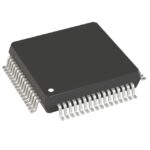 STM32L552RET6

The activity of extra discounts on wholesale prices is in full swing…
Please fill in your contact information and we will send you the latest wholesale price list.






