 ChipApex | Global Electronic Components Supplier

SEARCH
Search Product
Search Post
Search productSearch post
Consult the customer manager about the wholesale price.
consultation hotline:86-132-6715-2157
email:[email protected]
Contact the product manager for consultation. One-stop consultation is available.
Do you want a lower wholesale price? Please send us your inquiry and we will reply immediately.
STM32MP151DAA1 is listed in the Microprocessors range at ChipApex. The manufacturer field lists STMicroelectronics. Its product description is IC MPU STM32MP1 800MHZ 448LFBGA. Review the specifications below when checking this part for your BOM.
The STM32MP151DAA1 is a microprocessor featuring an Arm Cortex-A7 core operating at up to 800 MHz and a Cortex-M4 real-time coprocessor running at up to 209 MHz. It includes 708 Kbytes of internal SRAM, supports external DDR memory up to 1 Gbyte, and integrates an LCD-TFT controller with 24-bit parallel RGB output. The device provides 35 communication interfaces, including Gigabit Ethernet, USB 2.0 Host/OTG, SDMMC, SPI, I2C, and UARTs. Security features include TrustZone peripherals, active tamper detection, hardware cryptographic accelerators, and two true random number generators.
Verify the specific package variant corresponding to the 'AA' suffix in the ordering information section of the datasheet. Confirm that the required pinout matches the target PCB layout, as the STM32MP151 series utilizes multiple distinct packages such as TFBGA361 or LFBGA448. Ensure compatibility with the designated power management IC if utilizing battery-powered configurations.
Select this component when a single-chip solution is required to handle both complex operating system tasks and deterministic real-time control. The integrated LCD controller simplifies designs requiring graphical user interfaces without external graphics processors. Consider the extensive connectivity options for applications needing simultaneous Ethernet, USB, and serial communications.
This part belongs to the STM32MP151A/D product line within the broader STM32MP1 microprocessor family. It represents the entry-level configuration of the heterogeneous processing portfolio, designed to balance performance and power efficiency. The series targets applications demanding certified security and flexible development through OpenSTLinux distribution support.
STM32MP151AAC3T
Yes, the Cortex-A7 processor incorporates hardware virtualization support along with NEON technology.
The device supports external SDRAM memories with a maximum density of 1 Gbyte, compatible with LPDDR2/LPDDR3 or DDR3/DDR3L standards.
Explore related parts through Embedded, Integrated Circuits (ICs), all product categories, ChipApex homepage.
STMicroelectronics STM32MP151DAA1 is usually screened in Microprocessors category when power sequencing, recovery behavior, and I/O planning need a released validation path instead of ad hoc bring-up fixes. Key specs include Description (IC MPU STM32MP1 800MHZ 448LFBGA), Core (ARM® Cortex®-A7), Speed (209MHz, 800MHz), Temperature (-20°C ~ 105°C (TJ)), and Package/case (448-LFBGA). In practice, the release review usually stays anchored on mounting (Surface Mount).
Who is the manufacturer of STM32MP151DAA1?
STMicroelectronics
Any tips for migrating firmware to STM32MP151DAA1?
Confirm pin functions, peripheral differences, timing assumptions, and memory layout, then validate under worst-case operating conditions.
Can you confirm the Additional Interfaces for STM32MP151DAA1?
CAN, Ethernet, I2C, MMC/SD/SDIO, SPDIF, SPI, UART, USB
How is STM32MP151DAA1 packaged?
Tray
STMicroelectronics STM32MP151DAA1 is usually reviewed in Microprocessors designs after the team defines which released constraint would be most expensive to rediscover after build, such as contact stability, source settling, shielding, thermal rise, or service access. On released hardware, teams usually recheck core (ARM® Cortex®-A7), speed (209MHz, 800MHz), and package/case (448-LFBGA) first. In practice, they commonly sit at the center of sensor fusion, protocol processing, or deterministic control loops where latency and reliability matter. In real deployments, well-matched compute devices reduce software complexity by providing the right hardware acceleration and I/O integration. They also matter in systems where field recovery, programming access, and thermal or EMI stress need to remain supportable after release. In IoT devices, secure boot and low-power modes enable years-long deployments in outdoor enclosures exposed to humidity and temperature swings. The payoff is a design that is easier to qualify, easier to service, and more stable across environments.
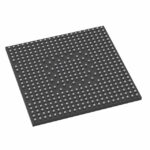 STM32MP151DAA1

The activity of extra discounts on wholesale prices is in full swing…
Please fill in your contact information and we will send you the latest wholesale price list.






