 ChipApex | Global Electronic Components Supplier
SEARCH
Search Product
Search Post
— IC芯片 | 连接器 | 传感器 | 被动器件 —
Search productSearch post
— IC芯片 | 连接器 | 传感器 | 被动器件 —
Consult the customer manager about the wholesale price.
consultation hotline:86-132-6715-2157
email:[email protected]
Contact the product manager for consultation. One-stop consultation is available.
Do you want a lower wholesale price? Please send us your inquiry and we will reply immediately.
The STMPE811QTR is an S-Touch advanced resistive touchscreen controller with an integrated 8-bit GPIO expander, manufactured by STMicroelectronics. It operates on a 1.8 V to 3.3 V supply voltage and features an integrated 4-wire touchscreen controller with a 128-depth buffer and movement detection algorithm. The device includes an 8-input 12-bit ADC, a temperature sensor, and supports both I2C and SPI interfaces. It provides 8 configurable GPIOs with wakeup capabilities and offers up to 25 kV air-gap ESD protection at the system level.
Verify component authenticity through authorized distributors or direct manufacturer channels. Confirm package integrity upon receipt, as the QFN16 (3x3 mm) form factor requires careful handling during soldering. Check revision markings against the datasheet ID_VER register values to ensure silicon compatibility. Ensure storage conditions comply with moisture sensitivity level requirements prior to assembly.
Select this component when a combined solution for resistive touch input and general-purpose I/O expansion is required in space-constrained designs. It is suitable for systems needing low quiescent current and multiple wakeup sources. Verify that the host processor supports either I2C or SPI protocols, as interface selection is determined by the MODE pin state at reset. Ensure the application voltage range aligns with the 1.8 V to 3.3 V operating specification.
The STMPE811QTR belongs to the STMPE811 series within STMicroelectronics' S-Touch portfolio. The 'QTR' suffix indicates the specific packaging configuration: QFN16 (3x3 mm) tape and reel format. This part serves as a peripheral controller for digital ASICs, addressing GPIO limitations in mobile multimedia platforms while providing dedicated touch sensing capabilities.
Publicly confirmed substitute part numbers are not available in the provided documentation. Designers should consult STMicroelectronics for current alternative recommendations or cross-reference with similar S-Touch family members like the STMPE610, noting differences in interface options and package types.
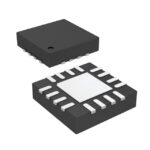 STMPE811QTR
The activity of extra discounts on wholesale prices is in full swing…
Please fill in your contact information and we will send you the latest wholesale price list.





