 ChipApex | Global Electronic Components Supplier
SEARCH
Search Product
Search Post
— IC芯片 | 连接器 | 传感器 | 被动器件 —
Search productSearch post
— IC芯片 | 连接器 | 传感器 | 被动器件 —
Consult the customer manager about the wholesale price.
consultation hotline:86-132-6715-2157
email:[email protected]
Contact the product manager for consultation. One-stop consultation is available.
Do you want a lower wholesale price? Please send us your inquiry and we will reply immediately.
The STP16CPC26MTR is a monolithic, low voltage, 16-bit constant current LED sink driver from STMicroelectronics. It integrates a 16-bit shift register and data latches to convert serial input into parallel output. The device features sixteen regulated current generators providing 5 mA to 90 mA per channel, adjustable via an external resistor. It supports a 3 V to 5.5 V power supply and guarantees a 20 V driving capability for series-connected LEDs. With a maximum clock frequency of 30 MHz, it enables high-speed data transmission. Thermal shutdown activates at 170 °C with approximately 15 °C hysteresis for overtemperature protection.
Verify the specific package variant (QSOP24, SO-24, TSSOP-24, or HTSSOP-24) when ordering, as the MTR suffix typically indicates tape and reel packaging but does not specify the physical footprint. Confirm that the required operating temperature range and current settings align with the application's thermal and electrical constraints before finalizing procurement.
Select this component for applications requiring precise current regulation across multiple LED channels without external discrete drivers. Ensure the design accommodates the 20 V drain-source voltage rating for series LED configurations. Consider the available packages if board space is limited, noting that the HTSSOP-24 includes an exposed pad for improved thermal dissipation compared to standard SOIC variants.
The STP16CPC26 belongs to the STP16 family of LED sink drivers designed for low-voltage operation. It serves as a core component in evaluation boards such as the STEVAL-LLL005V1 and STEVAL-ILL062V1, demonstrating its utility in both Bluetooth-connected matrix displays and high-brightness array applications controlled by microcontrollers like the STM32F030 or STM8S.
Public confirmed substitute part numbers are not explicitly documented in the provided source material. Users should consult official STMicroelectronics documentation for cross-reference information or verify compatibility based on pinout, current ratings, and package dimensions when considering alternative devices.
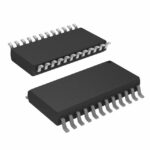 STP16CPC26MTR
The activity of extra discounts on wholesale prices is in full swing…
Please fill in your contact information and we will send you the latest wholesale price list.





